Tuesday, May 8, 2018

New AMP features announced for geotargeting content, as well as some GDPR support

Google’s AMP (Accelerated Mobile Pages) team has announced a new component that enables users of the mobile-optimized framework to target content to site visitors based on their locations. This new “amp-geo” component allows content to be served dynamically based on the visitor’s country, inferred from the IP address.

The AMP project has been regularly adding features since the framework launched over two years ago, including expanded support for analytics, advertising, forms, interactive/video (particularly via the Stories format), as well as more flexible layout and menu options.

This new component will be particularly useful to site owners that target content or products to multinational customers. It enables greater control over not just language options (see the example below of “soccer” vs. “football”) but also visuals — images, branding and so on.

Implementing the amp-geo component is pretty straightforward. From the announcement:

1. Include the amp-geo script:

2. Include the amp-geo tag:

3. Mark up your document with CSS to alter content based on the user’s approximate location:

The team also announced the ability to extend this location-based dynamic content display using groups — whereby many countries can be specified for single dynamic content display in the amp-geo tag via the ISOCountryGroups key, with likewise straightforward implementation:

1. As above, include the amp-geo script in the of your document.

2. Instead of just including an empty amp-geo tag, configure ISOCountryGroups to reduce the amount of code you have to write to specify behaviors across multiple locales.

3. As in the previous example, mark up the document with CSS to alter content based on the user’s approximate location:

More detailed information on using amp-geo, ISOCountryGroups and amp-bind integration of both can be found here.

AMP and GDPR

The AMP project team also recently announced the full release of new tools that enable sites to implement user controls aimed at capturing data tracking and usage consent from visitors. These new tools are conveniently released in advance of the looming GDPR (General Data Protection Regulation) compliance deadline, which is May 25, 2018. The group had first indicated these new controls were coming back in early April.

If you’re unfamiliar with what the GDPR lays out and how you or your clients may or may not be impacted, our sister site, MarTech Today, put together a terrific primer — “MarTech Today’s Guide to GDPR — The General Data Protection Regulation” — that you can download for free here.

GDPR requires consent to be obtained from any EU citizen visiting a site that collects personal data on that citizen. Having the ability to capture and store consent is critical — and an even greater challenge for anyone using the AMP framework, with its more limited feature set and capabilities. Utilizing a single consent-gathering framework across non-AMP and AMP introduces an additional layer of complexity for webmasters — as most sites supporting the mobile-targeted framework maintain two versions of their pages, and very few have migrated to all website pages being AMP-only.

To begin to address these issues, the AMP project released the amp-consent component. Utilizing this component, sites can capture consent from users for (a few) specific data tracking actions, assisting site owners needing to comply with new GDPR and/or other privacy regulations. Implementing the amp-consent component will vary depending on your consent gathering needs, thus you’ll want to review the component spec in its entirety, and thoroughly understand the options currently available.

To make it easier to get started with amp-consent, the AMP project gives three full code examples for webmasters to test:

The screen shots below illustrate how the consent for a few of the different examples provided surface in the AMP UI:

Basic Consent

Advanced Consent

In a post on his site, SEO Christian Kunz questions whether GDPR-compliant usage of AMP is actually possible. I reached out to [our publisher] Third Door Media’s GDPR consultant, Kristina Podnar, to discuss the issues Kunz raises and the challenges of being GDPR-compliant on the AMP framework.

Podnar emphasized understanding the difference between who is a data processor versus a data controller, a critical distinction in compliance. Data controllers (i.e., site owners) collecting data are required to obtain user consent; data processors are not necessarily. With AMP, if the site is served from Google’s cache, the question is whether Google is merely processing user data (IP addresses for example) or is also acting as a controller of that data (storing it in any way) while serving users an AMP site. In the AMP cache scenario, it does not appear that Google is a data controller.

It’s also important to note that due to the current limitations of the component, GDPR-compliant consent can only be captured in circumstances where a site needs to obtain consent for a single use of data being collected (e.g., via cookie, tracker). This is because GDPR requires that specific consent be gathered for each individual use of data being collected (for analytics, for ad serving, for a CRM and so on). Neither of the implementation examples allows for such opt-ins to be obtained. In particular, the “basic” example with a list of uses rolling into a single consent action is not compliant. Each list item would instead need to be an open checkbox where the user could opt-in per item.

The AMP team has indicated that they are working on adding support for more specific consent gathering, but as noted in this comment, two weeks ago, from AMP project collaborator Jasti, “Purpose based consent on a per vendor basis isn’t supported right now but we plan to in the future.”

Finally, it’s important to note that consent is currently only integrated with the following Google products, per the documentation:

  • DoubleClick & AdSense (effective 5/10/18).
  • AMP IMA Video (effective 5/15/18).
  • AMP Geo (effective 5/10/18).
  • AMP Stories (effective 5/15/18).

While this component is a good step forward to enabling site owners to capture user consent in AMP, until more integrations become available (note AMP supports over 100 ad networks, a dozen social networks, dozens of analytics vendors and so on), and per-use consent can be obtained in a single UI, amp-consent is far from being a solid solution to meeting strict GDPR-compliance.

Google’s annual developer conference, Google I/O kicks off today in San Jose, and we’ll update this article with any new information or announcements surrounding these AMP components.

The post New AMP features announced for geotargeting content, as well as some GDPR support appeared first on Search Engine Land.


Monday, May 7, 2018

SearchCap: AdWords interface changing, manual penalties & link building

Below is what happened in search today, as reported on Search Engine Land and from other places across the web.

From Search Engine Land:

Recent Headlines From Marketing Land, Our Sister Site Dedicated To Internet Marketing:

Search News From Around The Web:

The post SearchCap: AdWords interface changing, manual penalties & link building appeared first on Search Engine Land.

Link building is complicated: A rebuttal

Search Engine Land recently published a column by Julie Joyce about how we often overcomplicate link building, and when I read it, something surprising happened. I actually disagreed with her.

Well, I sort of disagree with her.

I do agree the process of securing a link, finding a site, contacting that site and getting a link is pretty straightforward. But I contend that if you want to achieve meaningful results with link building, matters are more complicated.

I see clients oversimplifying link building in terms of results all the time. They have a myopic view of link building and feel it is a simple math equation where increased input means increased output and success is determined by the number of links secured.

However, links are a means to an end; the intended results are more visibility, increased traffic and improved conversions. When the goal of link building is to drive search engine optimization (SEO) results instead of simply acquire a set number of links, link acquisition becomes much more complex.

Factors that can impede link-building success include:

  • On-page and technical elements.
  • Internal linking.
  • Client or departmental complications.

These issues can impact link-building performance, making a link campaign convoluted when viewed through the lens of SEO results.

Technical SEO Presentation

On-page and technical SEO

While links are vastly important to search visibility, backlinks only represent a portion of the SEO picture.

The best links in the world won’t achieve anything if they point to a site that’s a mess from a technical standpoint. There are a number of technical issues that could hamper your ability to drive organic search performance, including:

  • Speed issues.
  • Duplicate content.
  • Page errors.
  • Improper redirects.
  • Broken links and images.
  • Suboptimal uniform resource locator (URL) structure.

These factors affect crawling and indexation, which diminishes your external optimization — backlinks.

On-page optimization for the page you’re linking back to can either boost or hinder the SEO value of your links. Link quality and quantity are often the differentiators between ranking pages, but a well-optimized page has the advantage from the start.

Optimizing a page for important keywords with a targeted title and header tags is important, but don’t forget to optimize your page for searcher intent as well.

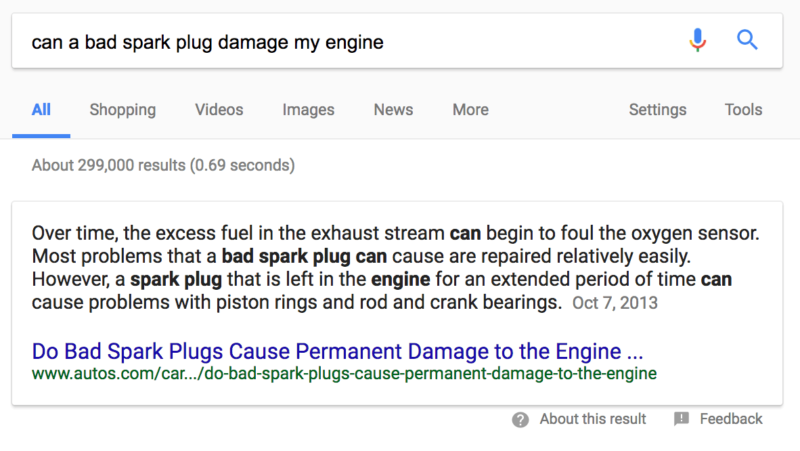
For example, if your page is targeting a question-based query, you should optimize your content for featured snippets Google often returns for these searches. Short, quick, clear answers typically perform best here.

Other considerations should include format, length and design. The best place to look for guidance on optimizing for intent is the relevant SERPs you’re targeting. If your page doesn’t come close to the quality (in terms of design, answering intent, preferred format and so on) of the ranking pages, your link acquisition efforts might be futile.

Your page should deserve to rank on its own merit. Links reinforce the value of your page to search engines. But if you’re securing links to a poorly optimized page, achieving desired results becomes tricky.

Internal linking

Internal link structure is often a forgotten part of link building and optimizing links for search.

Although internal links don’t have as much influence on search rankings as external links, they still play an important role and add another layer of complexity to a link campaign.

If you ignore internal links and focus solely on securing external links, you will be leaving equity on the table and making it harder to earn the results you want.

The internal link architecture of your website will determine how link equity is distributed throughout the site. If you’re not strategic with internal links, then the value from your external links might not benefit the important pages on your site.

Product pages are important to your business and have tremendous value for your site, but that value doesn’t necessarily translate to other sites and entice them to link. This is why you need internal links to direct link equity from linkable assets to product pages.

As Julie alluded to in her post, the process of securing links is simple, but the execution is difficult because you have to rely on someone else to put your link up.

With internal links, you’re the person putting the link up, at least in theory. If you’re an outside vendor or simply not in control of the website at your company, optimizing internal links can be frustrating.

While accounting for internal linking adds another level of complication to a link-building campaign, optimizing these links is integral to maximizing the search benefit of external backlinks.

Complications

Whether you’re an agency or an in-house SEO, dealing with bureaucracy and red tape can convolute even the most well-designed link campaigns.

There are many possible complications that can limit the success of a link campaign, some common issues include:

  • Restrictions on target pages. Link acquisition needs to be targeted and strategic, but opportunities are missed when the best pages aren’t promoted.
  • Micromanagement with outreach. Interference with outreach can negatively impact efficiency and efficacy.
  • Slow approval process. Lag time during multiple approval processes can kill the momentum of a campaign.
  • Limits on prospects. Limited prospect pools lead to limited links and results.
  • Communication issues. Effective link building requires open and consistent communication.
  • Lack of buy-in from upper management. Even successful campaigns can be failures if the C-suite doesn’t understand the value.

Bureaucracy can impact link building from beginning to end, and even after links are secured. This red tape complicates link acquisition, often making it more difficult than it needs to be.

Wrap-up

Okay, so I don’t really disagree with Julie! As SEOs and link builders, we do often overcomplicate link acquisition. In trying to explain this difference in strategy and tactics, we sometimes overthink link building and make it more confusing than necessary.

The process of finding a website, contacting them and securing a link is simple, but driving SEO results, beyond the number of links secured, quickly becomes more complicated.

There are a number of extenuating circumstances and outside forces that contribute to the complexities of managing a successful link campaign. Whether they are technical issues, suboptimal internal linking structure or restrictions on outreach messaging, securing results from link building is more complicated than securing the links.

Securing one link might be simple and straightforward, but understanding how that link supports a broader SEO and digital marketing strategy requires research, creativity, analysis and coordination.

The post Link building is complicated: A rebuttal appeared first on Search Engine Land.

Act now! SMX Advanced Early Bird rates end Saturday night

Skip the basics and dive into the deep end of search marketing. Attend Search Engine Land’s SMX® Advanced June 11-13 in Seattle.

More than 79% of available passes have already been sold and Early Bird rates expire this Saturday night. Book now to secure your seat and get a great deal!

Your All Access Pass unlocks the complete SMX Advanced experience, including:

  • 30+ leading industry vendors’ products and solutions in the Expo Hall.
  • Exclusive networking opportunities, including the prestigious Search Engine Land Awards.
  • Top-shelf amenities: nourishing breakfasts, hot lunches, free WiFi, and more.

Don’t miss your opportunity to attend SMX Advanced at a great rate. Do your wallet a favor: Register now for just $1,895 and enjoy $400 in savings! This is the absolute lowest price we can offer for All Access passes. Seize the opportunity today!

The post Act now! SMX Advanced Early Bird rates end Saturday night appeared first on Search Engine Land.

Old AdWords interface will be phased out by year-end

Google announced Monday that the old AdWords interface will hit the dustbin by the end of the year.

Last year, Google rolled out the new interface, which it calls the new AdWords experience, to all advertisers and has continued to add new features. Advertisers have been able to toggle back and forth between the two.

Not all features and reports will be coming over from the old version, but Remarketing Lists for Search Ads and Google Analytics columns are now available as is an update to the Keyword Planner that also uses Material Design.

An update to the Keyword Planner is now live.

The new interface has had some rough reception by long-term AdWords users. In the announcement blog post, Jerry Dischler, VP of product management, says the company has taken feedback into account and made updates, including the ability to “find features faster with more intuitive icons, hide and unhide paused or removed items, and see more of your performance data by expanding the statistics table”.

Reports, filters and automated rules that are available in the new AdWords will be moved over automatically from the old one.

Dischler notes that accounts will not be switched to the new interface during November or December, so it seems you can expect the change over to happen by the end of October at the latest.Google will send out email notifications ahead of the switch.

The post Old AdWords interface will be phased out by year-end appeared first on Search Engine Land.
US Teacher Appreciation Week Google doodle highlights what it means to be a teacher

Today marks the start of Teacher Appreciation Week across the US. To honor our country’s educators, Google is sharing a doodle on its US home page created around the theme: “What it means to be a teacher.”

The doodle was produced in partnership with the 55 teachers named 2018’s “US State Teachers of the Year” by the Council of Chief State School Officers, a nonprofit organization made up of public officials who head US elementary and secondary school departments. All 55 teachers were invited to Google’s headquarters in January for a workshop, part of which included the teachers working with the doodle team on today’s image.

To create the doodle, the teachers were split into five groups and then each group was tasked to come up with concepts around what it means to be a teacher connected to the letters G-O-O-G-L-E.

“The groups brainstormed, sketched, and developed their plans for their letter, much like what my students and I do every day in my art room,” says Jonathan Juravich, an art teacher from Liberty Tree Elementary in Ohio, who was one of the 55 teachers of the year.

Juravich says, for him, being a teacher is about his connection to his students, letting them know, “I am here with you. Let’s do this together.” The art teacher hopes today’s doodle conveys the idea that “… as teachers, we are a part of the quest for discovery. That we are there to guide, to encourage and to support our students as unique individuals. That this journey is one that is full of challenges, but also joy.”

Here is the full image being shared on today’s Google home page that leads to a search for “US Teacher Appreciation Week”:

You can read more about Juravich’s experience working with the Google doodle team on the Google Doodle blog.

The post US Teacher Appreciation Week Google doodle highlights what it means to be a teacher appeared first on Search Engine Land.

Ask the SMXpert: Google manual penalties explained

The Ask the SMXpert series continues with the question and answer (Q&A) segment of sessions held at Search Marketing Expo (SMX) West 2018.

Today’s Q&A is from the All Google Manual Penalties Explained session with speaker Kaspar Szymanski, with an introduction by moderator Chris Sherman.

Moderator Chris Sherman: For those of you who don’t know Kaspar, he is a veteran of the Google Search Quality team, where he was the driving force behind global web spam tackling initiatives and the public face spearheading Google webmaster outreach and communication efforts.

He speaks not only as an insider but also someone who has spent years helping clients get out of trouble and back into Google’s good graces. His advice is solid and well worth heeding!


Question:  What happens when you get an unnatural outbound links penalty but never sold links? The website used proper FTC disclosure and all outbound links in articles were no-follow. However, the site did have a lot of affiliate links that were dofollow. After “no-following” those links and doing a reconsideration request, the site was approved. Is it common for sites to get penalties because they used “dofollow” affiliate links?

Kaspar: In short, yes.

Regardless of Federal Trade Commission (FTC) disclosure which has no bearing on search engine optimization (SEO) or how Google perceives links, outgoing affiliate links are almost always commercial, and so are the anchor texts. That fact alone is sufficient grounds to always use nofollow attributes on the links in order to avoid violating Google Webmaster Guidelines and thereby risking a penalty.

Question: Is it true manual penalties aren’t removed manually? That a bot reads through the reconsideration requests instead of humans?

Answer: No, that is not correct; a human reviewer reads through the reconsideration request. From Google:

Reconsideration requests are handled by real people, so good documentation helps the reviewer better understand the steps taken to address the manual action.

Question: To avoid a penalty, do you still suggest disavowing links in light of the Google update when they said that they would ignore low-quality links?

Answer: Disavowing undesirable links is always a good approach.

While Google may strive to identify low-quality links, their algorithms do not always get it right. Hence, there is no point in risking that Google may or may not discount low-quality links on their end.

Question:  I’ve heard that being too generous in disavowing can do more harm than good (until you get a penalty). What’s the right balance?

Answer: It is not about finding a balance but about disavowing links that are likely to harm a website’s position in Google’s search engine results pages (SERPs) or pose a risk from a penalization point of view.

Question: With the billions of websites on the internet, how does Google select a website to undergo a manual penalty? Do they look at traffic or rankings?

Answer: Popular, high-traffic sites are likely to attract scrutiny, but there are also other obvious lead sources, such as competitor spam reports.

Google will also look at seasonal or trending query investigations as well. “Black Friday,” “Valentines Day” [and] “Super Bowl finals” are all examples of seasonal queries which may be of interest because they are likely to be relevant to a lot of Google users at a certain point in time.

Google Trends provides a glimpse of which queries are trending at a given moment.

There’s nothing malicious about a site being reviewed. It is fair to say any popular, successful site has likely been looked into by the Google team at some point. The vast majority of sites investigated are not under suspicion and consequently, there’s no penalty applied to them.

Question: Does Google evaluate spam/backlinks differently for adult sites? If yes, how? What do they look for that’s different?

Answer: No, there are no double standards for different verticals.

Question: Is hidden content ground[s] for violation? Even if the content is relevant to the page and we hide it just for the look of the page (like an H1, for example)?

Answer: It depends on how egregious and what the intent of the hidden content is.

Hidden content can increase the risk of penalization. Google does understand content collapsed for user experience reasons, which are usually harmless. But! Keyword stuffed SEO content, which does not serve users, does merit a penalty.

Question: How do I know which links to remove? What is a bad link?

Answer: Every link has to be reviewed in the context of an individual backlink profile.

Anchor text and its distribution are important factors because they clearly separate merit-based link growth which is diverse (natural) from intentional PageRank passing link building which is optimized and heavy on commercially viable terms.

Where optimized links point to is equally important, hence landing page distribution is equally a factor. On page content and site quality, as well as whether they link to other clear-cut spam sites, [is] relevant.

Question: Is there a blacklist in which Google collects data about penalties sites, and does this affect their ranking?

Answer: While penalties negatively affect site rankings, Google does not maintain a blacklist of sites. Every site that has been in violation of Google Guidelines can recover and do very well in Google’s search results.

Have more questions for our SMXperts? Complete this form and we’ll run your question and the SMXpert responses shortly!


Want to learn more in-depth SEO tactics to avoid having to deal with a penalty? Join us next month at our SMX Advanced conference in Seattle, where top industry experts will share their tips, tactics and strategy around these topics and more:

The post Ask the SMXpert: Google manual penalties explained appeared first on Search Engine Land.