Thursday, April 26, 2018

SearchCap: Local search ads, Intent keywords & The Flying Housewife

Below is what happened in search today, as reported on Search Engine Land and from other places across the web.

From Search Engine Land:

Recent Headlines From Marketing Land, Our Sister Site Dedicated To Internet Marketing:

Search News From Around The Web:

The post SearchCap: Local search ads, Intent keywords & The Flying Housewife appeared first on Search Engine Land.

New date! Customer data strategies & identity resolution webinar


When it comes to customer data, fundamentals matter. If you don’t know who your customers are, you can’t create personalized brand experiences that increase revenue and lifetime value.

Before you jump on the latest big digital marketing bandwagon, ask yourself these questions: How complete is our customer data? How much of our customer data sits in silos? Can we scale what we know about our customers?

Join our experts as we discuss data best practices that will solidify your customer data foundation. We’ll explore how new techniques in identity resolution can connect the data fragments that exist across your organization and fuel more relevant customer relationship marketing strategies.

Register today for “Customer Data Strategies & Identity Resolution: Best Practices,” produced by Digital Marketing Depot and sponsored by FullContact.

The post New date! Customer data strategies & identity resolution webinar appeared first on Search Engine Land.

Look Ma, no keywords! Phrase-free AdWords campaigns are here

Some brick-and-mortar advertisers logged into accounts in late February to find new campaigns named “Local Search Ads Experiment Campaign” populated in AdWords.

Google has confirmed that these campaigns are currently running for select advertisers only and promote verified business locations in local search results in both Google Search and maps without using keywords.

Instead of keywords, Google uses Google My Business (GMB) information such as location address and location category to trigger relevant results. Advertisers cannot request to take part in the experiment at this time.

While these campaigns are still in very early days, how should advertisers think about this recent development?

Locally focused optimizations

Right now, most brick-and-mortar advertisers only have one lever available to control when ads show up in Google maps searches or in local ad displays directly on Google.com: the activation or deactivation of location extensions.

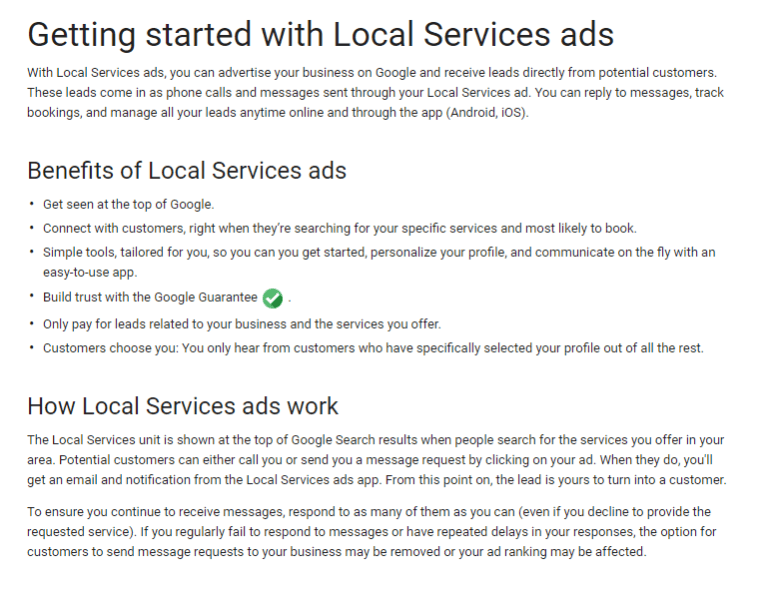
Local Services is another paid local format that is managed through a dedicated local services portal, but it is currently limited to a handful of home service industries in select US cities. Thus, location extensions are driving local ad results for most brick-and-mortar brands in most locations at this point.

Location extensions have existed for years and are traditionally added to AdWords campaigns for all brick-and-mortar advertisers as a best practice for gaining additional search engine results pages (SERP) real estate and giving searchers useful information on store locations and hours.

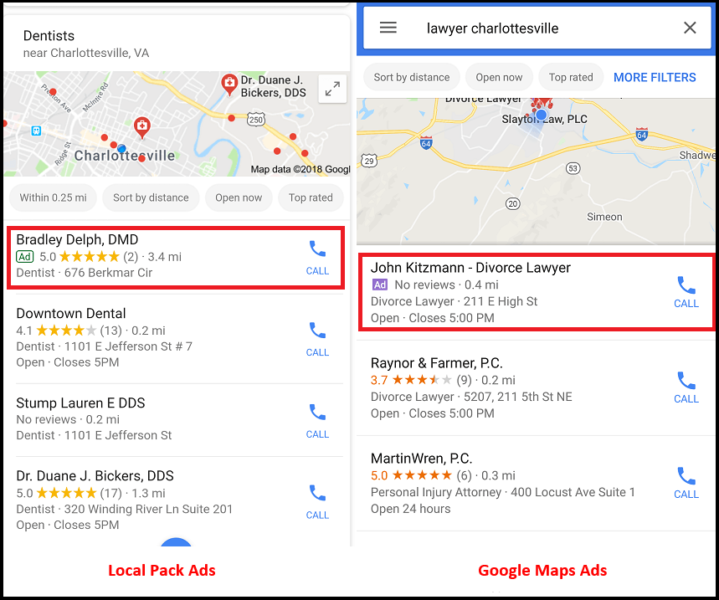
Over the past couple of years, Google has used these extensions and active keywords to trigger ad units for local searches in maps and the local pack.

While there’s no clean way to segment maps traffic from other AdWords traffic at this time, click type reports feature “get location details” clicks, which essentially all come from maps, according to Google.

The share of traffic coming from this click type increased meaningfully through mid-2017, particularly for brand keywords, but has remained roughly steady over the last three quarters.

Maps and other locally focused units like ads in local packs are grouped in with Google.com rather than the search partner network, and thus, all campaigns with location extensions are automatically opted into showing maps ads. Thus, advertisers have no ability to manage this traffic beyond turning it on or off with the addition or subtraction of location extensions on campaigns.

The possibility of new local-only campaigns gives hope for being able to manage these searches separately from traditional Google searches. While the lack of keywords does cause some concern over lack of control, I’d hope advertisers will at least be able to set negative keywords for these campaigns to trim out irrelevant queries if or when Google moves past the experimental phase.

Performance doesn’t currently populate in the user interface (UI), and Google plans to communicate results directly to advertisers in time, so it’s unclear what kind of queries are triggering traffic and how performance looks at this stage.

However, Google does appear to be equipping Google My Business (GMB) with new features that might help it trigger relevant ad results through these campaigns, as judged by two recent updates.

GMB gets new bells and whistles

In the month following the release of these experiment campaigns, Google made two notable changes to Google My Business.

The first came with the introduction of business descriptions within GMB, allowing 750 characters with which to briefly inform customers about what a particular business offers and any other defining
facts about the business. These should not include promotions, universal resource locators (URLs) or hypertext markup language (HTML) code.

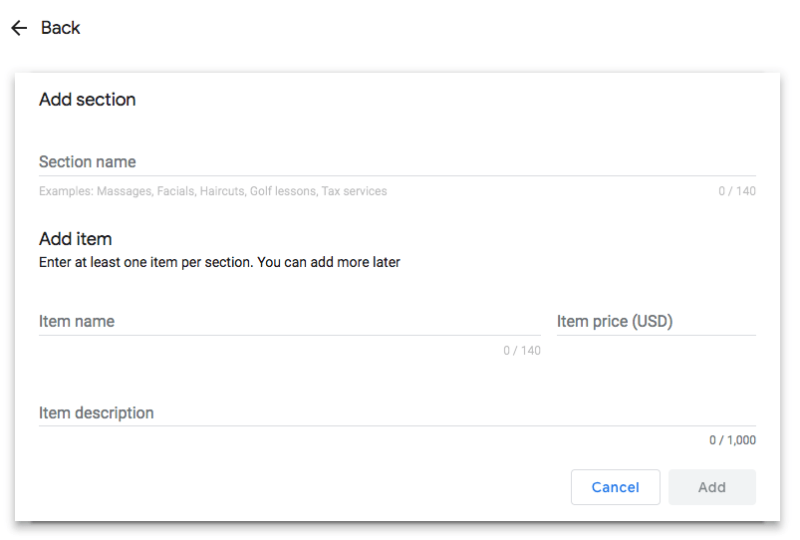
The second update gave businesses the ability to specify any services they provide, creating a structured combination of service name, item name within that service, item price and item description. While GMB menus have existed for restaurants since February 2018, they are now available for businesses in a host of other industries as well.

With both of these changes, in a host of industries, Google now has additional signals to use in triggering ads based on GMB information. Further, in the case of the services update, it now has structured pricing information for services which might be incorporated into both paid and organic listings.

Alternative motives at play?

The lack of keywords in local campaigns offer advertisers the possibility of being able to target local searchers without relying on existing campaigns and active keywords. This could be a nice advancement for brands looking to monitor and control this traffic better than the current setup allows.

The recent updates to Google My Business give business owners the ability to provide important information to Google, which should help Google in finding relevant local results for searchers in both Google Maps and on Google.com. It should also give users better reference points to go on in determining which local business to use.

Looking over at the local experiment campaigns, however, it seems like at least part of the motivation here might be to better equip AdWords with the information it needs to match ads with relevant searches sans keywords.

Maybe these local experiment campaigns will fall by the wayside, as plenty of Google tests and experiments do, and the GMB updates are really just focused on giving users more information and better results. It wouldn’t surprise me if there are alternative motives at play.

Regardless of the implications for monetization, optimizing these new details in GMB is likely to be important for ranking for local searches. Much like proper product feed management gives Google product information to help a brand rank well in Google Shopping results, the structured data associated with services in GMB is likely to require similar optimization.

Imagine typing in “oil change near me” and returning a local pack complete with oil change pricing information for nearby automotive repair shops. This is already happening with product-specific searches through local inventory ads, a variation of Google Shopping ads which includes information about when a product is available at a nearby store.

Conclusion

Whether such listings are paid or organic, I think it makes total sense for Google to start packing this kind of information into the Local Pack for more searches than just those specifying products. The additional information Google is now set to glean from GMB for local businesses in a variety of industries is likely to help it do just that.

The post Look Ma, no keywords! Phrase-free AdWords campaigns are here appeared first on Search Engine Land.

Intent-based keyword research: Let Google be your guide

Whether paid or organic, when it comes to search marketing, keywords are king.

Good keyword research is at the heart of any successful search marketing campaign, so it pays to get it right from the get-go.

Good keyword research, however, isn’t just about search volume, competition level, suggested bids or any of the other metrics you see in a keyword research tool like Google’s keyword planner.

While all of these metrics are helpful, the most important trait of any keyword is the intent behind it.

From a data perspective, a keyword can look like a perfect fit, but if most of the searches related to a term aren’t related to your business, that keyword probably isn’t worth your time or money.

Unfortunately, Google’s keyword planner doesn’t tell you a lot about the intent behind a keyword. But that doesn’t mean you have to guess. Google can still tell you a lot about the intent behind a keyword; you just have to know where to look.

In this article, we’ll take a look at why intent is such an important part of keyword research, how to get at the intent behind a keyword and ways to use intent to guide your search engine marketing (SEM) and search engine optimization (SEO) keyword strategies.

To begin, let’s start by taking a look at how the intent behind a keyword can affect your SEM and SEO efforts.

Intent and SEM

The easiest way to demonstrate the importance of intent in search marketing is to look at a search engine marketing example.

Why? With SEM, you pay for every click, so if you’re targeting the wrong intent, you can waste a lot of money… fast!

For example, one of my company’s clients offers business translation services (documents, international deals and so on). During our initial audit of their accounts, I noticed something interesting: They were bidding on the keyword “translate.”

At first glance, this keyword seems to make sense. Their business is all about translation, so “translate” seems like a no-brainer keyword, especially when the keyword gets hundreds of millions of searches every month.

Not surprisingly, bidding on “translate” had won them a lot of clicks: $150,000 worth of clicks, to be precise.

This would have been great, except for one little thing: Those clicks didn’t turn into sales.

Despite the fact this keyword and many others looked relevant to their business and had great search volume, their SEM campaigns were a colossal waste of money. The intent behind their keywords was wrong.

While “translate” is a great match for what this business does, most people who use the word “translate” in an online search aren’t looking for business translation services. In other words, the keyword was right, but the intent was wrong, and the end result was $150,000 down the drain.

Intent and SEO

Intent isn’t just an SEM problem, though.

For example, someone in my company recently wrote an article focused on pay-per-click (PPC) tactics. It was a cheeky piece that used Wes Craven’s Freddie Krueger slasher film as a framework for discussing why different PPC branding tactics were so effective.

Almost overnight, traffic to our blog increased 497 percent. It was our first real blogging breakthrough!

Which would have been great… except that no one was converting.

Our traffic wasn’t finding us because they were not searching for things like “PPC branding” or “branding tactics,” they were searching for “freddy krueger tactics.”

Somehow, we had ended up as the #1 article for “freddy krueger tactics,” and we were getting hundreds of clicks a day from fans of the knife-fingered serial killer.

Our content was targeted on the right keywords, but the intent we were targeting was wrong, horribly wrong.

Bad traffic is bad news

Now, before you argue that free traffic is always good for your content, even if the intent is wrong, try searching on Google for “PPC branding tactics”:
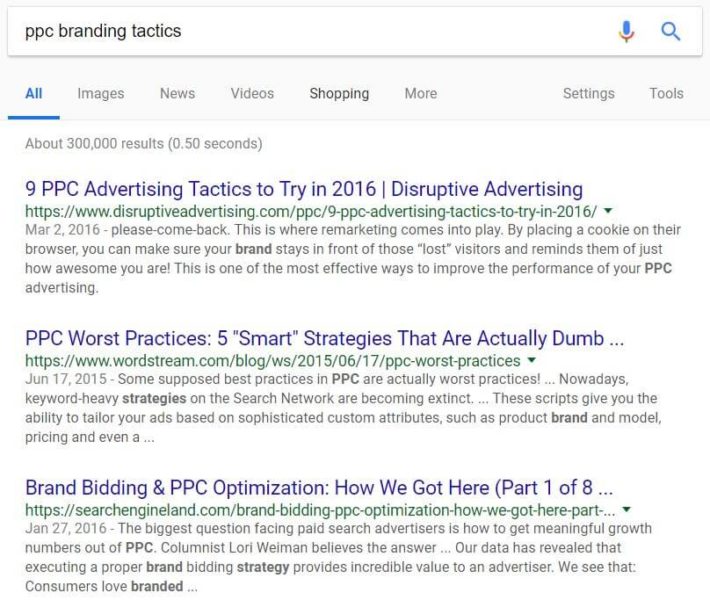
Yes, our company article ranks #1, but it isn’t our Freddy Krueger article. Even after all those thousands of clicks, that article doesn’t rank on the first page for the keyword it was optimized for. In fact, it doesn’t even show up for this search.

Instead, the article that matches the intent behind the keyword “PPC branding tactics” is the one that ranks.

Wondering why? Because Google is dedicated to understanding intent. For Google’s algorithms, an article that gets a lot of clicks from people searching for “Freddy Krueger tactics” probably isn’t a good match for people who are searching for “PPC branding tactics,” even if that’s what the article is actually about.

Obviously, we didn’t write this article with the goal of dominating the keyword “Freddy Krueger tactics,” but the article was written to catch the eye of “Nightmare on Elm Street” fans, so we inadvertently ended up targeting the wrong intent and completely missing our target audience.

Whether it’s SEM or SEO, the intent behind your keywords has an enormous effect on the success of your marketing. This doesn’t mean that you can’t get clever with your content or ads, but if you want to succeed at search marketing, you need to match your marketing to the intent behind your keywords.

Figuring out intent

Fortunately, when it comes to intent, you don’t have to guess, Google has actually done a lot of the work for you!

Google is dedicated to understanding search intent. It has invested enormous resources into creating algorithms that can identify the intent behind a search and deliver the results you’re looking for. Instead of picking keywords that seem right and hoping for the best, why not use Google’s algorithms to identify the intent behind your keywords?

Warning signs

To show you how this works, let’s jump back up to our translation company example and take a look at the search results for “translate”:
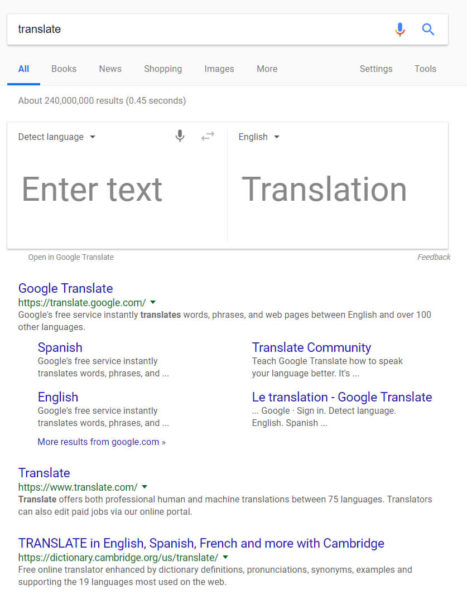
First off, the fact that the first result is a giant Google Translate widget should be a big red flag.

If so many people type in “translate” because they want to quickly translate a word or phrase that Google has created a dedicated widget for meeting that need, that keyword probably isn’t one a business to business (B2B) translation business should be targeting.

Even if we ignore the widget, none of the first-page results are related in any way to business translation. Same goes for the second page of results.

In fact, translation services of any type don’t show up until the third page, and those translation services are for individuals, not businesses:

Now, I’m not saying Google is perfect at predicting or interpreting intent, but based on the results Google is showing here and 450 million other times a month, I’d wager that almost no one who types in “translate” is looking for a business translation service.

Positive indicators

On the other hand, let’s take a look at what we get if we search for “business translation”:

First off, unlike the “translate” keyword, the first thing you see from this keyword is ads.

If you’re thinking about running SEM ads, that’s actually a good sign. Yes, it means you’ve got competition, but it also means that other companies think the intent is good enough to run their own ads on the keyword.

But let’s see what Google thinks people who search for “business translation” are after. Here are the organic search results:
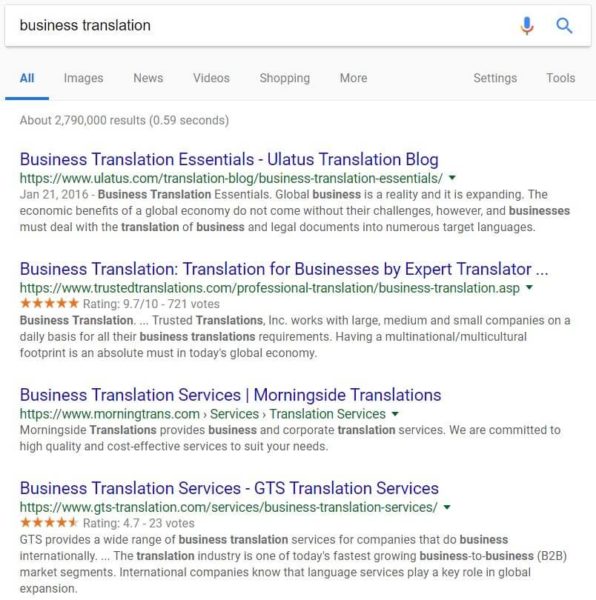
The keyword “business translation” could imply a lot of different intents, ranging from educational intent (“what is business translation?”) to the actual desire to know what the word “business” is in another language.

However, from these business listings, it looks like Google thinks people who search for “business translation” are looking for a business translation service. This seems like a good intent to target.

Of course, the monthly search volume for “business translation” is several orders of magnitude lower than the search volume for “translate,” but it’s much better to get 100 conversions a month than 1 million clicks a month from the wrong traffic — especially when you’re paying for those clicks.

As a quick aside, if you want a real eye-opener, take a look at your search terms report and try typing in the searches your ads are showing up for. Your ads just might be showing up in some of the most unexpected places.

SEM vs. SEO: Targeting the right intent

While checking the search engine results page (SERP) for a keyword seems simple, in my experience, many search marketers, especially paid search marketers, never bother to look at what Google thinks is relevant content for a keyword.

That is unfortunate, because the wealth of insight Google offers can save you from wasting a ton of money and/or time on the wrong keywords.

Depending on whether you’re trying to pick the right keywords for an SEM or an SEO campaign, however, the “right” intent can mean very different things. Here are some things to keep in mind while picking SEM and SEO keywords:

  • SEM keywords. SEM keywords are expensive. Every click costs you, so if you’re going to target a keyword in your SEM campaigns, you need to target keywords with high purchasing intent. So, if none of the first page search results for a potential keyword indicate purchasing intent (home pages of sales or lead-gen orientated sites, product pages, services pages and so on), it may not be a good SEM keyword. No matter how right a keyword seems, a SERP filled with links to forums, question and answer (Q&A) sites, blog posts, Wikipedia pages or other informational sites usually isn’t worth spending money on. People in information-gathering mode usually don’t want to buy right away, so paying to get them to your site or landing page is usually a waste of money. However, if the SERP is filled with links to businesses, especially competitors, you’ve probably just discovered a great candidate for your SEM campaigns.
  • SEO keywords. SEO keywords, on the other hand, are fairly cheap. As long as the intent behind a search is relevant to your business (i.e., not “Freddy Krueger”), an SEO keyword doesn’t need to be particularly high-intent to be profitable. That is important, because ranking organically for high-intent keywords can often be difficult and time-consuming. With SEO keywords, it’s often a good idea to target a wide range of keywords that indicate an interest in what your business offers. Even if those keywords don’t translate into an immediate purchase, they help you build brand awareness with a relevant audience. So, if you type in a potential keyword and see a lot of blog posts, Q&A sites or forums that are discussing topics that are directly related to your core business offering, you’ve found a great keyword.

Creating content around those keywords will help put you in front of the right audience and will eventually improve your organic ranking for high purchasing-intent keywords. So it’s a double win!

Conclusion

Whether you’re trying to pick SEM keywords, SEO keywords or both, the key to successful search marketing is picking keywords with the right intent. No matter how much search volume a keyword might have, if those searches aren’t relevant to your business, they aren’t worth your time and/or money.

Fortunately, you don’t have to guess why people use certain keywords in their searches. By conducting those searches yourself and taking a hard look at the results, you can use Google’s algorithms to get at the general intent behind a given keyword.

The post Intent-based keyword research: Let Google be your guide appeared first on Search Engine Land.

Fanny Blankers-Koen Google doodle honors Olympic runner who broke records & shattered stereotypes

Today’s Google doodle marks what would have been the 100th birthday of Olympic athlete Fanny Blankers-Koen, the first woman to win four gold medals in a single Olympics.

The Dutch-born runner’s first Olympic competition was during the 1936 Berlin games when she was 18. Twelve years later, Blankers-Koen would shatter records and tear down false assumptions around female athletes when she took home the gold in four different races as a 30-year old mother of two at the 1948 Olympic games in London.

“After the 1940 and 1944 Olympics were canceled, many thought Blankers-Koen would never make another Olympics. When she declared her intentions to compete in the 1948 London Games, she received letters from many criticizing her for continuing to race despite being a mother and insisting she stay home,” writes Google in its Google Doodle blog post about the Olympian.

Blankers-Koen’s refusal to fall in line, or be bullied by people who believed a woman couldn’t be both a mother and an Olympian, earned her the nickname “The Flying Housewife” when she took home gold for the 100m, 80m hurdles, 200m, and 4x100m relay during the London Olympics.

The doodle leads to a search for “Fanny Blankers-Koen” and is being shared on Google’s homepages in the US, the Netherlands, Iceland, Ireland, the UK, Sweden, Greece, Australia and New Zealand.

In addition to being the first woman to win four gold medals in a single Olympics, Blankers-Koen also set a record that still stands today, winning the women’s 200m by 0.7 seconds — the highest margin in Olympics 200m history.

The post Fanny Blankers-Koen Google doodle honors Olympic runner who broke records & shattered stereotypes appeared first on Search Engine Land.

Wednesday, April 25, 2018

SearchCap: PPC branded content & bad local reviews

Below is what happened in search today, as reported on Search Engine Land and from other places across the web.

From Search Engine Land:

Recent Headlines From Marketing Land, Our Sister Site Dedicated To Internet Marketing:

Search News From Around The Web:

The post SearchCap: PPC branded content & bad local reviews appeared first on Search Engine Land.

How to use good ol’ PPC to support fun and creative branded content

Branded content and pay-per-click (PPC) aren’t ordinarily included together in the same section of a digital media plan, but there are definite synergies between these two marketing disciplines.
One way to increase the efficiency and profitability of a PPC budget is to examine how PPC can be used to support really fun and creative branded content.

Branded content is evolving

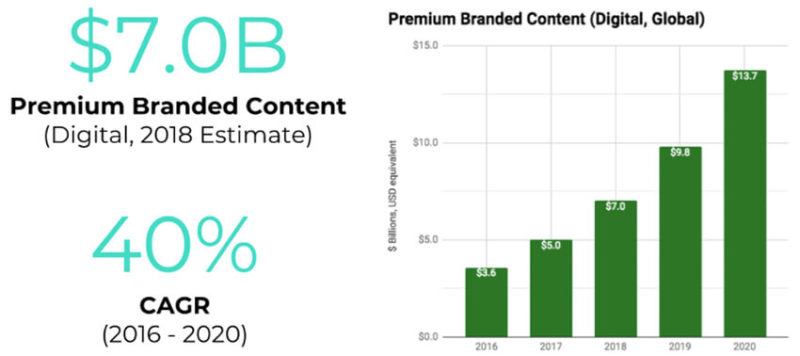
The category of branded content has exploded online within both business-to-business (B2B) and business-to-consumer (B2C) marketing, according to data from PQMedia and Polar.

Image courtesy of Polar.me

Branded content goes by many names, but it originated as “advertorial” content (in print) and as “infomercials” (in broadcast TV). This form of content is still very popular, particularly in certain industry segments in which the use of the brand in advertorials can be authentic and compelling.

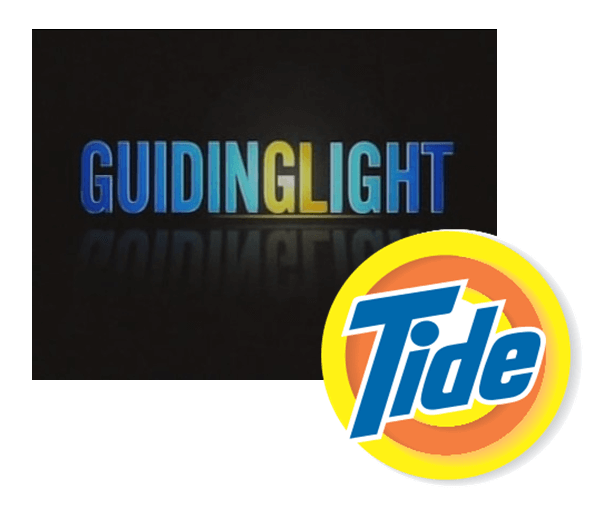
In the digital domain, branded content has now evolved to more closely resemble the soap opera model of days long past.

The media strategy behind soap operas was brilliant: Unlike product placement within shows (another form of branded content), large soap manufacturers collaborated with the major television (TV) networks to underwrite the production cost of shows they knew their target audience would love and watch religiously.

Of course, the soap brand names were announced prominently at the beginning and end of any particular episode, and sponsorship arrangements also specified the airing of a certain number of regular advertising spots mentioning the brand.

Where PPC comes in

If the stats are any indication, your company (or client) is probably doing some form of digital branded content already, and this content lies somewhere along the continuum of advertorial, digital product placement (influencers) to sponsored content.

Like the soap opera sponsors of yore, the hope is to make sure the content is interesting, too, and resonates with the right audience.

That’s great news for you as search marketers. With the tools at your disposal, you can make sure more people who are interested in the branded content actually have an opportunity to see it.

In nearly every case, the branded content is centered around keywords that are NOT currently in your PPC campaigns.

The team working on that initiative probably isn’t thinking about amplifying the impact of that branded content (much of which is expensive to produce and place) using PPC search. Branded content opens up a whole segment of keywords you can potentially bid on (some might require specific contractual language).

Here are some general buckets of keywords that probably are new to your campaigns (unless you’ve been developing and hosting a lot of informational and educational content on your site):

1. Keywords related to the topic of the article or content your marketing team is sponsoring. A food brand might be paying for inclusion within a section of an online publisher’s pages where recipes are featured (including that brand as an ingredient). Why not bid on keywords relating to each recipe?

For an athletic-wear brand sponsoring the college soccer coverage on a sports publisher site, why not bid on team names and/or team member names (in conjunction with the sport or team name)?

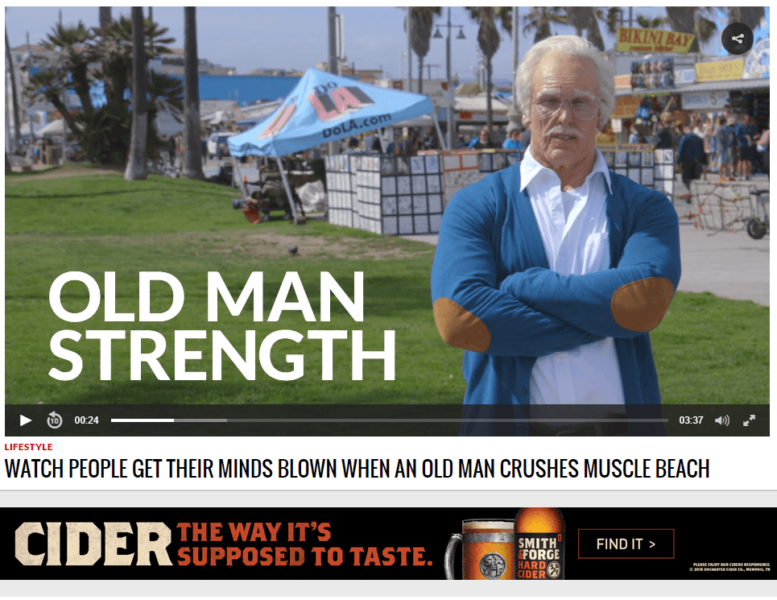
Or (my favorite), if I were on the marketing team of Smith & Forge Hard Cider, I would be using PPC search to support the amazing Thrillist-produced content in which Thrillist disguised competitive athlete Kenneth Leverich as a senior citizen at Muscle Beach to challenge bodybuilders.

In this example, keywords could be included that include the terms “muscle beach” along with each of the lifts, tricks, moves and even equipment names related to this fun video.

2. Keywords related to the problem solved by the content. When Chase, Ritz-Carlton and The Wall Street Journal teamed up for “Inside the Moment,” they could have bid on the cities, neighborhoods and featured places in their virtual reality (VR) tours of notable cities and places.

3. Keywords related to celebrities or other VIPs used in the content. This may require a line in their contracts to allow their names and likenesses to be used to promote the content, so be sure to check that out before getting started.

For example, 1800 Tequila and Billboard Magazine’s features of “Hip-Hop History” by city included mentions and participation of a lot of popular performers. (To further filter this and other alcoholic beverage PPC support campaigns, remember to use “age” as a demographic filter for bid depression and bid boost.)

Bridging across marketing silos

Agencies play an important role in making sure branded content is on-message and on-brand, particularly if it talks about the brand.

If the content being sponsored is more of an audience-focused strategy to get the brand in front of the right people, then the level of editorial control exerted by the agency should be less, particularly if a very important person (VIP) or influencer is being used.

Things need to be authentic.

I’ve always said PPC search doesn’t sit in a silo. Expanding a PPC campaign to support branded content that costs a pretty penny to produce is a great way to get involved in the broader marketing of your brand.

Because I have a strong interest in nonprofit causes, I especially liked a piece of branded content done by Gawker to educate on the risks of smoking, not just to humans, but also to cats that live with humans, in a simple game called “Catmageddon.”

I’ve become such a fan of branded content and the power of collaboration between publishers/broadcaster/influencers with agencies and clients that I’m actually crazy enough to be bidding on Gawker to apply cause marketing best practices to publishing.

Conclusion

Check with your teams and see if they are doing branded content, and take the opportunity to add significant value to the company and expose you to new PPC strategies.

The post How to use good ol’ PPC to support fun and creative branded content appeared first on Search Engine Land.