Monday, February 26, 2018

Google confirms bug with crawl stats in ‘time spent downloading a page’ Search Console report

Google’s John Mueller has confirmed on Twitter that there is a reporting glitch with the crawl stats “time spent downloading a page” report in the Google Search Console for the dates February 20 and 21.

There was a massive dip in the number being reported on those two days, but that dip was just a glitch in the reporting. It does not reflect actual crawling or search rankings.

Here is a screen shot:

John wrote:

If you’re seeing a weird drop in the Crawl Stats in Search Console for a day last week, that’s a reporting issue on our side which you can ignore. Sorry for the confusion & hope your week otherwise starts off great!

Here is the tweet:

The post Google confirms bug with crawl stats in ‘time spent downloading a page’ Search Console report appeared first on Search Engine Land.

Google releases Mobile Scorecard & Impact Calculator tools to illustrate importance of mobile page speed

Google has been focused on getting marketers and site owners to focus on improving mobile site experiences for many years now. On Monday at Mobile World Congress in Barcelona, the search giant announced the release of two new mobile benchmarking resources: new Mobile Scorecard and conversion Impact Calculator.

Both tools are aimed at giving marketers clear visuals to get buy-in from stakeholders for mobile site speed investments.

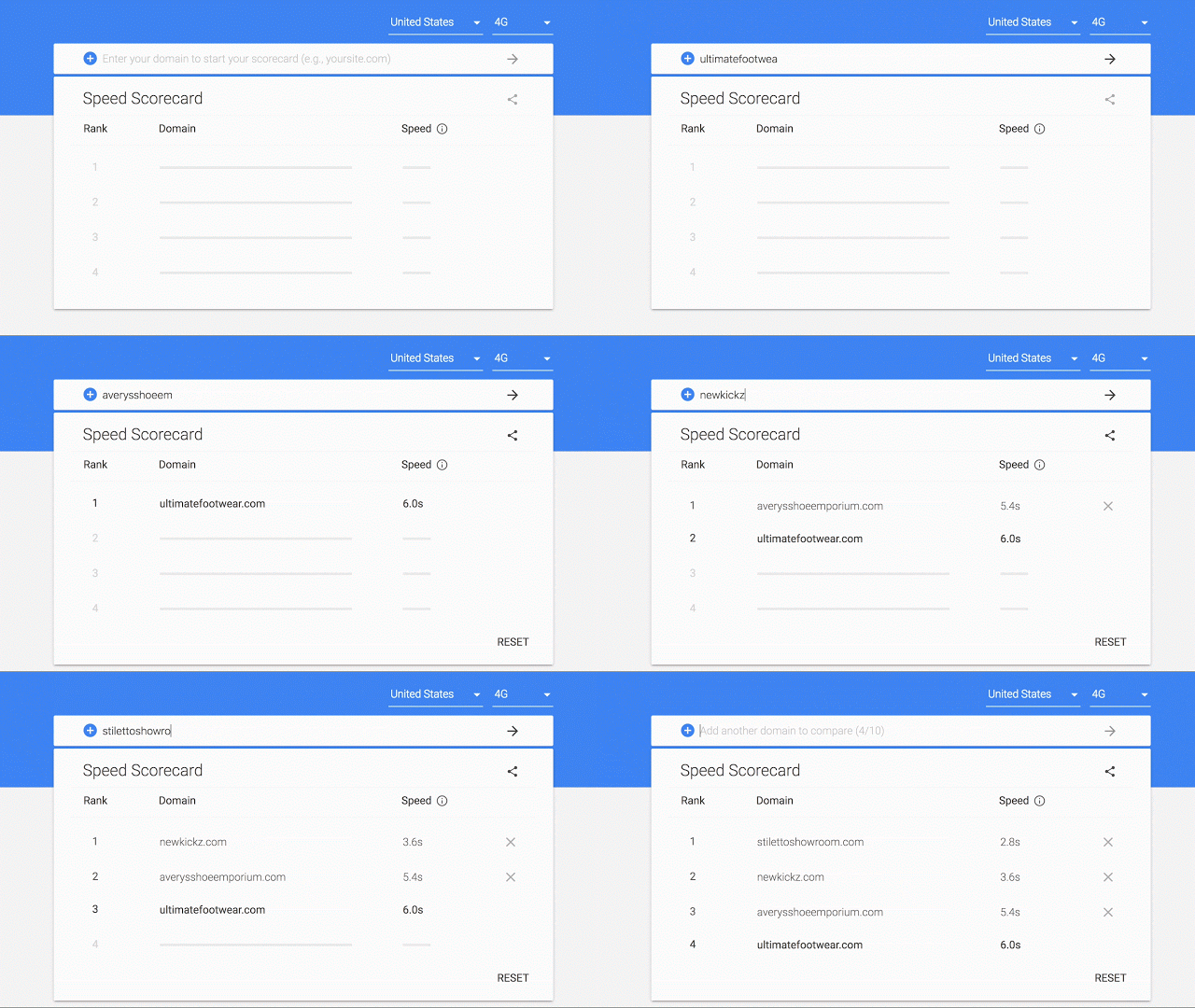
The Mobile Scorecard taps Chrome User Experience Report data to compare speed of several sites on mobile. That’s the same database of latency data from Chrome users that Google started using in its PageSpeed Insights Tool in January. Google says the Mobile Scorecard can report on thousands of sites from 12 countries.

As a guideline, Google recommends a site loads and becomes usable within five seconds on mid-range mobile devices with 3G connections and within three seconds on 4G connections.

To put the Mobile Scorecard data into monetary perspective for stakeholders, the new Impact Calculator is designed to show just how much conversion revenue a site is missing out on with slow loading speed.

The conversion Impact Calculator is based on data from The State of Online Retail Performance report from April 2017 that showed each second of delay in page load on a retail site can hurt conversions by up to 20 percent. The calculator shows how a change in page load can drive revenue up or down after marketers put in their average monthly visitors, average order value and conversion rate. Google created a similar tool for publishers called DoubleClick Publisher Revenue Calculator.

The Mobile Scorecard and the Impact Calculator can be both be accessed here.

The post Google releases Mobile Scorecard & Impact Calculator tools to illustrate importance of mobile page speed appeared first on Search Engine Land.

Sunday, February 25, 2018

Winter Olympics Day 17 Google doodle marks the end of the 2018 games

Today marks the closing ceremonies of this year’s Winter Olympics and Google’s final Snow Games doodle. During the last 17 days, the Google doodle team of artists, engineers, production staff and sound designers has created an animated image for each day of the competitions.

“Now that we’re at the tail-end of the Games, and the final finish-line has been crossed, everybody takes a much needed break to enjoy the fireworks and their new friendships,” writes Google on its Google Doodle blog.

The series featured a cast of competing animals, all honoring the athletes and games at PyeongChang’s 2018 Winter Olympics. Each doodle was animated, included audio, and led to a search for “Winter Olympics” on Google’s US homepage and most of its international pages.

Two of the doodles played double-duty as Winter Olympics doodles: one posted on Valentine’s Day and the other to mark the Lunar New Year.

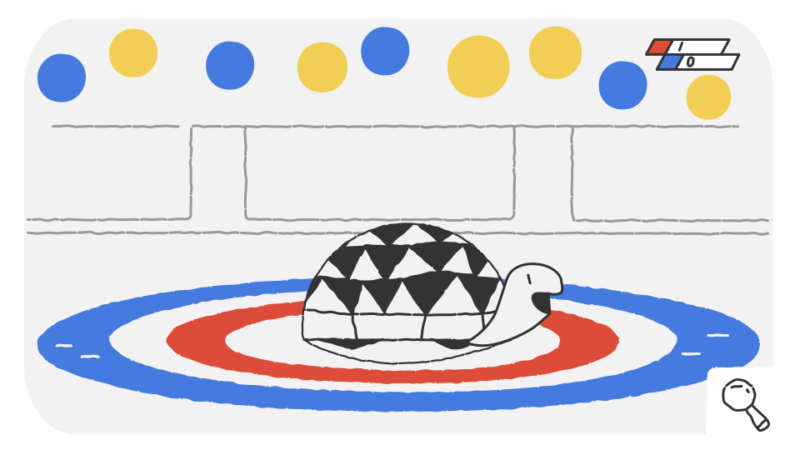
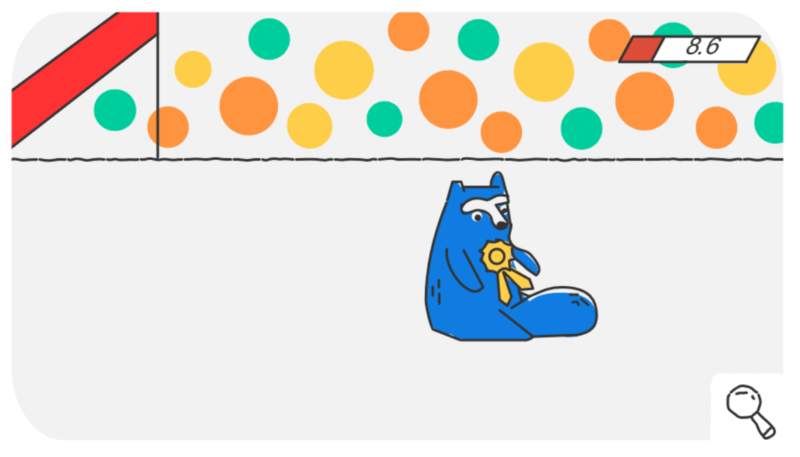
Here are screen shots for all 17 of Google’s Winter Olympics series:

Day 1

Day 2

Day 3

Day 4

Day 5

Day 6 and the Valentine’s Day Doodle

Day 7

Day 8 and the Lunar New Year Doodle

Day 9

Day 10

Day 11

Day 12

Day 13

Day 14

Day 15

Day 16

Day 17

You can see the fully animated doodles with sound on Google’s Snow Games website.

The post Winter Olympics Day 17 Google doodle marks the end of the 2018 games appeared first on Search Engine Land.

Friday, February 23, 2018

SearchCap: Google Assistant updates, search referral growth & marketing efforts

Below is what happened in search today, as reported on Search Engine Land and from other places across the web.

From Search Engine Land:

Recent Headlines From Marketing Land, Our Sister Site Dedicated To Internet Marketing:

Search News From Around The Web:

The post SearchCap: Google Assistant updates, search referral growth & marketing efforts appeared first on Search Engine Land.

3 ways to revitalize your digital marketing program

One of the joys of digital marketing is the ability to quickly see the results of an implemented strategy.  With a lot of real-time data and the ability to accurately attribute success back to effort, it is instant gratification at its finest.

But often after continued success, marketers face the dreaded performance plateau.  Here are three go-to strategies to try when you find you are stuck with wheels spinning in neutral.

Never underestimate the importance of UX testing

Even a small boost in conversion rate can make an enormous difference in results for a program. Not only does it have potential to boost top line revenue, but it can have a significant impact on bottom line results.

Most marketing leaders find making the business case for user experience (UX) improvement work a slam dunk as minimal gains result in significantly increased revenue. However, it is often easier to preach the importance of testing and focusing on the user than to actually practice this belief.

Here are some tips to keep in mind to make the most of your UX optimization efforts.

  • Get a fresh set of eyes. Whether it be an agency, a consultant, or a new team member, often a new perspective is needed to identify opportunities and create impactful tests. Internal stakeholders can be blinded by personal attachment to work they have done.  They can be biased by past results or be too close to the business to be able to view things through the lens of a prospect.  Getting an impartial voice in the mix can help limit these pitfalls and ensure you are testing the right things to move toward success.
  • Ensure you have the right resource managing your UX strategy. UX requires a unique skill set.  Not only does someone need to be analytically minded, they must be a creative problem solver.  Additionally, this person needs to be highly scientific when it comes to testing and not let their own personal bias and opinions color their thinking.  That’s one tall order! While admittedly not an easy combination of skills to find in one person or agency, it is essential for your UX strategy to work.  Taking the time to ensure the right resource is in place is critical.
  • Ensure the right and left hand are talking. In the digital marketing world, it seems everything is automated. It makes life easier and ensures seamless processes. When it comes to UX, it is important to remember that the experience your potential customer has does not begin the moment they hit your site. It begins pre-click.  The ads your prospects see, the sites on which your ads are served, your social presence, etc. – all of these touchpoints are part of the experience potential customers have with your brand and influence their likelihood of converting once on your site.  Cross-channel learnings are often quantifiable and automated reporting helps to ensure all parties have access to the data and are optimizing accordingly.  However, many of the insights needed are qualitative which means all parties need to be talking. For true UX success, ensure there is an environment that fosters collaboration, the sharing of insights, and avoids a siloed channel approach.

Rethink past approaches

With a constantly changing marketplace, evolving online behavior, and ever improving digital marketing technology, a tactic tested in the past may perform very differently today.  Here are some suggested plans of attack:

  • Revisit failed search campaigns. With improved audience targeting available for search campaigns, general campaigns that were not fruitful in the past can achieve profitability.  Remarketing Lists for Search Ads (RLSA) and Customer Match  are fantastic ways to accomplish this.  Additionally, improvements are continually being made to bid strategies and ad rotation settings that can make a significant impact on a search campaign to hit and exceed goals.

Customer Match
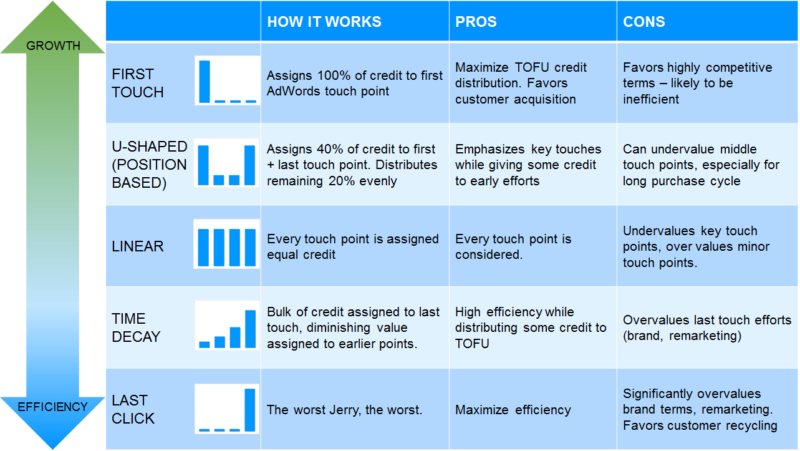
  • Rethink attribution. The majority of digital marketers still operate on a last-click basis.  This approach is easy to understand and measure, but often over-emphasizes channels (while understating others), which could leave potential revenue on the table. Using Google Analytics reporting and AdWords Attribution, I suggest marketers re-assess the data. Evaluate the impact of Assisted Conversions, the flow of user paths, and compare performance when toggling between attribution modeling types (first click, last click, time decay, etc.).  Often, there are gems to be found that can help you to refocus your efforts and jumpstart growth.
AdWords Attribution Models
  • Consider offline conversions. Not all conversions happen online. Even if most of yours do, if you are not bringing offline conversions into AdWords, you are missing out on the full picture of your program efficacy.  Bringing in offline conversions allows you to utilize automated bidding and ad optimization features to the fullest.  Further, you can create Similar Audience lists based on the characteristics of all your converters, not just online converters.

Keep marketing after the sale

Focusing on customer Lifetime Value (LTV) and retention, rather than limiting your view to just the initial sale, opens up substantial profitability for your existing acquisition efforts. This extends across multiple marketing channels.

  • Utilize social. Social media channels can be a great vehicle for customer service, communication, and brand reinforcement. It gives your brand a personality and a digital connection with your existing customer base.
  • Change the messaging. Social and display advertising is a fantastic way to stay in front of current customers. Now that these individuals have been acquired, your ad messaging will need to change. Ensure messaging speaks to new offerings, awards/industry recognition, and how your company can address additional problems or needs they may have. This is a great opportunity to not just keep your customers engaged with your brand, but to cross-sell them on additional offerings.
  • Create relevant content. Often the focus of site content is to attract and convert a new audience. Ensure your site also speaks to your existing customer base. Utilize your customer service team to understand the needs, concerns, and questions voiced by your customers. Use these insights to create compelling and relevant content that speaks to both prospective and current customers.

Summary

Performance plateaus happen to the best of marketers, but they don’t need to stick around for long. Get creative and think outside of the box. Double-down on conversion optimization, rethink and refine previous marketing tactics, and market for maximum LTV.

These suggestions should help you move beyond current results and take your digital marketing performance to the next level, allowing you to increase revenue, expand your reach, and improve your profitability.

The post 3 ways to revitalize your digital marketing program appeared first on Search Engine Land.

Community Corner: Spotlight on Search Engine Land Award Winners MediaHub & UPMC Health Plan


Last year, more than twenty agencies and SEO professionals were recognized for their excellence in SEO and search marketing at the 2017 Search Engine Land Awards. To give insight into the winning campaigns and the award submission process, we have been conducting interviews featuring last year’s award winners.

In today’s edition of the Search Engine Land Award Winners spotlight series, MediaHub’s associate director of search shares more about the Royal Caribbean search campaign that earned the agency its “Best Enterprise SEM Initiative for Travel & Lifestyle” award. UPMC Health Plan’s Zach Cole is also featured. His team was named the “Best In-house Team of the Year for SEM” at last year’s awards event.

The 2018 Search Engine Land Awards will be hosted on June 12 in Seattle, Washington as part of the SMX Advance Conference after hours events.

First launched in 2015, this will be the fourth consecutive year for the Search Engine Land Awards. And while the event is just over three months from now, the deadline for submitting an entry is nearing. The early-entry deadline for this year’s Search Engine Land Awards is March 31, with applications accepted through April 13, 2018. There’s still plenty of time — and this year’s event includes seven new award categories.

If you’re considering whether or not to submit an entry, be sure to check out what winning has meant to agencies like iCrossing, Precis Digital and SapientRazorfish in our previous interviews with last year’s winners.

Best Enterprise SEM Initiative for Travel & Lifestyle: MediaHub


MediaHub’s win for the “Best Enterprise SEM Initiative for Travel and Lifestyle” was the first time the agency’s Boston office had submitted a search award entry.

“In addition to truly believing the campaign we put together for Royal Caribbean was a great success, we also wanted to showcase our search skills as an agency on a larger stage,” says Casey Barth, the associate director of search for MediaHub.

To decide which campaign to submit, Barth says the team created an in-depth process to make sure they were not only demonstrating their best work, but giving as many data points and supporting information as they could.

“It started with generating ideas for submissions across all offices, voting on what we felt was the most award-worthy, and then putting a dedicated team member in-place to aggregate data and craft the submission,” says Barth.

The associate director of search says the win was huge for her team, and has echoed the importance they put on Search within a marketing campaign.

When asked what she believes was the key ingredient of the campaign that helped the agency take home the trophy, Barth says she thinks it was the mix of smart optimizations, and “cutting-edge” testing that helped drive performance.

“In addition to submitting one of our top performing campaigns, we also considered all of the strategies implemented from leveraging remarketing audiences and expanding into new markets to establishing a cross-device strategy.”

According to Barth, the Royal Caribbean campaign did an excellent job of showcasing the agency’s strategy, and demonstrated MediaHub’s goal to help clients earn the largest share of attention in a competitive search landscape.

“It was validation to the hard work we put into driving client success, dedication to staying on top of the latest industry trend, and our search practice as a whole,” says Barth of her team’s win.

Best In-house Team of the Year for SEM: UPMC Health Plan

UPMC Health Plan’s Zach Cole and Chris Daley were part of the team named the “Best In-house Team of the Year for SEM” at last year’s Search Engine Land Awards event.

“We’re huge fans of Search Engine Land and the creative thinking and next-level knowledge that they feature,” says Cole, “When they Landy Awards launched an In-house Team of the Year category, we, of course, wanted to put our work to the test of the industry experts.”

Cole notes how nice it is to have search-specific award opportunities where his team can demonstrate its innovative and effective search campaign strategies to other professionals in the industry.

“Good work tends to speak for itself, but it’s always nice to discuss the process and share out more of the behind-the-scenes work that only search professionals would understand,” says Cole, “Plus Chris and I have a really great relationship (perhaps having a small team is an advantage in some ways) so it’s always fun to talk about that dynamic as well.”

When considering how to put together their award entry, Cole says, for his team, it’s always about telling a story.

“We start with the foundation of search performance — results, results, results — and shape the narrative from there.”

According to Cole, it took a few days to put the submission materials together.

“The general approach is to take a hard look at all the search work we’ve done for the year, outline the narrative, prepare all the documents to share out, and then, of course, take our annual glamour shot. We also share it out with a few other stakeholders in the company, put on the finishing touches, and finally submit.”

Cole says the team’s winning entry went well beyond simply featuring search insights and results by including details that demonstrated how the team’s search strategy showed empathy for the intended audience and ability to collaborate with other teams.

“We also talked about exploratory methods to uncover learnings from other key groups, and intense research of the problems B2B decision makers are turning to search to solve,” says Cole, “That, combined with relentless monitoring and optimization that you’d expect from dedicated search pros, led to a great campaign and result.”

Cole believes their holistic approach to search really helped drive the team’s success, and says that the award was met with an overwhelming positive response around his department and the UPMC organization as a whole. He also shared that being recognized as a Search Engine Land Award winner has helped elevate the paid search channel within the department, creating more of an appetite around paid search and the drive to push more boundaries with new campaigns.

“As a small in-house team, we truly valued the recognition and reinforcement of our approach to the competitive search space — especially on a global scale!”

If you want to join the esteemed list of Search Engine Land Award winners, please submit your entry before the early entry deadline of March 31, 2018. Submissions will be accepted through the final deadline of April 13. The Search Engine Land Awards team has added several new categories this year, including Best Search & Social Media Marketing Initiative, Best Research Initiative by an Agency or Individual and Best Boutique Agency for SEO and SEM.

You can learn more about the upcoming awards event and how to submit your entry at 2018 Search Engine Land Awards.

Stay tuned to this column, as the next Search Engine Land Award winners featured will be “In-House Team of the Year for SEO,” “Best Retailer Search Marketing Initiative for SEM,” and “Best B2C SEM Initiative for Enterprise.”

The post Community Corner: Spotlight on Search Engine Land Award Winners MediaHub & UPMC Health Plan appeared first on Search Engine Land.

Search in Pics: Google’s Captain America, a mural at Google & a shiny Google slide

In this week’s Search In Pictures, here are the latest images culled from the web, showing what people eat at the search engine companies, how they play, who they meet, where they speak, what toys they have and more.

This Googler dressed up as Captain America:


Source: Instagram

What did they do to this foosball table?


Source: Instagram

A Google word of mouth t-shirt from the old days:


Source: Twitter

A shiny Google slide:


Source: Instagram

A mural at the GooglePlex:


Source: Instagram

The post Search in Pics: Google’s Captain America, a mural at Google & a shiny Google slide appeared first on Search Engine Land.