Monday, January 29, 2018

Merkle Q4 2017: Search ad click growth fell, ad spend rose 23% across Google, Bing, Yahoo

Overall, in Q4 2017, search ad click volume growth slowed by 9 percent as the average cost per click (CPC) increased 14 percent. Spend rose 24 percent year over year. Engagement and conversion performance from search ads improved, however, and clicks from phones accounted for 50 percent of all clicks for the first time. Those are among the findings reported in Merkle’s Q4 2017 Digital Marketing Report.

Source: Merkle

These search ad trends are consistent with the Q4 performance trends reported by Marin Software last week.

Google ad spend growth slowed slightly from Q3

Spending on Google search ads increased 23 percent overall year over year in Q4 2017. Retail and consumer goods spending on search ads rose 24 percent during the holiday season, according to Merkle’s Q4 2017 Digital Marketing Report.

That growth in search ad spend is actually a slight deceleration from Q3. Search spend jumped 38 percent on mobile and 21 percent on desktop. Click volume growth slowed sharply to 8 percent.

Brand queries drove Google CPCs higher in Q4, with a year-over-year increase of 23 percent — after falling 13 percent after Google implemented a change to Ad Rank thresholds. Additionally, non-brand text ad bid minimums for the first page of results rose by as much as 23 percent year over year in Q4. Merkle says that minimum bids for non-brand ads were flat throughout Q4 2016.

Source: Merkle

Audience targeting — Customer Match, Similar Audiences and RLSA — accounted for 30 percent of Google search ad clicks in Q4, up 10 percent from the previous year.

Non-brand text ad spend growth slowed from 20 percent in Q3 to 12 percent in Q4; however, conversion rates and sales per click improved. In a related area, Merkle cites a decline in non-brand traffic from Google search partners, which tend to drive lower cost but lower quality traffic.

The traffic quality improvements from Google search ads are reflected in the value of non-brand clicks. Desktop revenue per click (RPC) rose nearly 20 percent from the previous year in Q4. Phone RPC increased 12 percent year over year. The exception was non-brand tablet traffic, which represents a smaller share of overall clicks.

Source: Merkle

Bing Ads & Yahoo Gemini see Q4 spend surge

Across the Bing and Yahoo search networks, search spend bounced up 32 percent year over year, while click volume growth increased from just 1 percent in Q3 to 14 percent in Q4. CPCs were up 15 percent year over year in Q4 compared to just 5 percent in Q3. Merkle says the increases were largely due to advertisers focusing more on non-brand ads, which have higher CPCs than brand.

Source: Merkle

Shopping ad growth trends keep going up for Google & Bing

Spending on Google Shopping continues to grow faster than spending on text ads among retailers. Google Shopping spend increased 32 percent compared to a steady 15 percent for text ads year over year in Q4. Among Merkle retail clients, Google Shopping accounted for 55 percent of Google search ads clicks in the US and 58 percent in the UK.

Local Inventory Ad share also continued to rise on mobile, generating 11 percent of mobile Shopping ad clicks in Q4, up from 7 percent the prior year.

Bing Product Ads also saw spend increases in Q4, driven (surprisingly) by mobile traffic, which increased sevenfold year over year and nearly doubled from Q3. Bing Product ads spend rose 62 percent, while CPCs fell 11 percent, largely as a result of the increase in mobile clicks. Product ads accounted for 25 percent of Bing search ad clicks overall and 41 percent of non-brand ad clicks among retailer clients in Q4.

Source: Merkle

The full report can be downloaded here (registration required).

The post Merkle Q4 2017: Search ad click growth fell, ad spend rose 23% across Google, Bing, Yahoo appeared first on Search Engine Land.

Customer loyalty: A key ingredient for successful local search results

Customer loyalty is often overlooked in local search. The thinking is that people are searching for new places to shop or for things they don’t know about already. If they were a regular or loyal customer, they wouldn’t need to search.

But that’s not entirely true. Due to the  “Google effect” or digital amnesia, consumers process information differently today. We’ve become so inundated with information we have adjusted to relying on search outlets like Google to find information instead of remembering the actual content.

For example, instead of recalling the name of the coffee shop I enjoyed the last time I visited Washington, D.C., I remembered that it was near the train station. Once I pulled up search results for coffee shops on Google Maps, the choices of names and locations triggered my memory.

Loyalty in local search is about being top of mind when choices need to be made and friends ask for recommendations. Below are six ways to build customer loyalty and drive traffic to your local search results.

 1. The social value of loyalty

Social media’s impact on local search is growing incredibly fast, and I am seeing it play out on my own Facebook news feed. Here are two posts from the last few weeks seeking recommendations for plumbers, lawyers and restaurants:

Friends seeking suggestions has become so popular that Facebook now offers an “Ask for Recommendations” option for those writing a post or updating their status. And in true local search form, the function asks for a location and shows any suggestions posted on a map.

According to studies by Edelman, 87 percent of committed customers will recommend a brand through liking and sharing. Your loyal customers will respond to recommendation requests and put their reputation on the line for you if they like your brand.

And they do so enthusiastically. The image above looking for recommendations garnered significantly more engagement through comments than typical posts. A friend who asked about restaurants received 87 comments — that is significant!

The potential for such social media recommendations to disrupt traditional local search channels is huge. There’s an intrinsic value in the personal relationship and word-of-mouth recommendation the Google algorithm can never duplicate.

Consumers trust their friends and can gauge deeper insight on a recommendation without reading a lengthy review based on what they know about that friend’s taste in relation to their own. Businesses likewise rate word-of-mouth the most effective marketing because of the trust factor and weight usually attributed to a personal recommendation.

Facebook is extending the merit of word-of-mouth recommendations by proxy, too. When searching for businesses on Facebook, search results include a list of friends who have recommended the establishment.

As this functionality grows and social media is increasingly used for local search, boosting customer loyalty will pay off in a big way.

2.  Loyal customers are both your cheerleaders and your bodyguards

It used to be that once you were found through a local search, you at least controlled the narrative from that point, as the search result would link to your website, ad or owned content.

Today, that control has been wrestled away by consumers. Search results now show up on private Facebook newsfeeds seeking recommendations. Even a Google Knowledge card populated by information from a Google My Business (GMB) account can be hijacked by bad reviews.

This is why loyal customers who actively engage online on behalf of a business they patronize are highly valuable. Studies have shown committed customers who recommend a brand presumably write positive reviews and will also defend a brand against criticism. I’ve seen this brand defense firsthand!

A friend of mine was quite vocal recently after reading a negative review of a restaurant he liked on Facebook. He and other loyal customers spoke up and supported the restaurant. Whether it be on Facebook or Yelp, local businesses benefit when loyal customers share their views.

3. The core of loyalty

For a local business, loyalty means being selected despite the customer having other local choices. This is especially helpful for small businesses but works for national brands as well.

In the case of Chick-Fil-A, the brand has been so successful in getting diners to visit their stores no matter where they are, the company’s biggest challenge now is how to squeeze $5 million in sales out of a kitchen designed for $2 million.

I see Chick-Fil-A’s success in building loyalty whenever I travel through the airport and find myself in a dining area with a Chick-Fil-A. There are always different eating options nearby, yet customers line up 30 deep and wait 15 to 20 minutes to order and receive their food.

Brand loyalty travels with you, no matter what the wait!

4.  The economics of loyalty

The economic benefit of loyalty is not just the “per capita” increase in volume of business brought in by a return customer. Loyal customers cost less to convert, spend more when they do and upsell more frequently.

  • According to Google, it costs up to 10x more to acquire a new customer compared to retaining an old one and,
  • Existing customers are three to 12 times more likely to buy from a business than a new customer.
  • Existing customers are 50 percent more likely to try new products says data from Koyne Marketing and they spend 31 percent more than new customers.

So, spending to retain customers and keep them coming back is a good investment.

5.  Data intelligence from loyalty

Data is key to understanding business performance and consumer behaviors. Getting data from repeat customers is easier and yields higher quality.

Most customers who participate in loyalty programs voluntarily turn over personal information about themselves. Those programs provide an opportunity for the business to ask questions and get a deeper understanding of behaviors and preferences. And while loyalty programs seem to provide the most opportunity for capturing data, there are other less formal ways to do it, such as stored payment accounts or CRM databases tracked by phone or address.

Once that type of information is incorporated into operations, it helps track valuable data, such as what actions are done by which customers, what products they purchase and what times they shop. Attribution of online marketing efforts to offline purchases can be captured. And the business can see the way those customers engage with it.

This is all valuable data that will help provide better service and improve local search marketing.

6.  Targeting improvements from loyalty

While there are a variety of uses for customer data, it’s the improved targeting capabilities that are key to local search marketing. The preferences of repeat customers help build profiles of your ideal and most valuable audience.

Whether it be through a loyalty program or records of return customers, even some basic data can help narrow down your best audience and understand what works.

For example, tracking the spending habits through your loyalty program can help identify young professional women on Pinterest to see if they are responding to local search marketing efforts. Your loyalty program can also be used to look for additional demographics and opportunities to target local advertising and promotions.

A loyalty program can answer key questions and provide data for a targeting strategy developed from that information:

  • Who? Your demographically profiled targeted audience, as well as return customers with two or more visits in the last month.
  • How? Via customer email, direct mail and those channels getting the best response, such as Pinterest or Instagram.
  • Where? Geotargeting around gyms and natural food markets might be at least tested. Address information may also help define the radius of how far your marketing reaches.
  • When? Spend most at times when your audience engages on social media — whether it’s at lunchtime or late at night.
  • What? Use content your best audience most frequently responds to.

Ready to reexamine your strategy for engaging with loyal customers? Here are some simple tips to help you get started on building customer loyalty:

  • Provide a great customer experience, a consistently good customer experience is why many remain loyal to a brand and share positive experiences on social media.
  • Reduce friction in transactions, and beware of drastic changes. Convenience as an important reason customers remain loyal to a brand.
  • Stay engaged with your loyal customers. According to CitiGroup, 86% percent of emotionally engaged consumers want brands to be engaged and reciprocate their loyalty in two-way interactions. Social media and email are great ways to do it.
  • Stand for something.  American consumers show loyalty to brands that share their values, Chick-Fil-A is a prime example of this. The company also wears its values on its sleeve, staying closed on Sundays and still beating many of its competitors multiple times in revenue per store.
  • Use loyalty programs to identify your customers. Loyalty programs help tie your customers with data that is useful in helping reach them and serve them better.
  • Make it easy for your customers to participate. With all the technology we have, sometimes we overcomplicate things, don’t make it hard for to sign up for a loyalty program.
  • Offer valuable perks. A loyalty report from Bond Brand Loyalty states redeemers are twice as satisfied with loyalty programs as non-redeemers, and those who enjoy the program are 10 times more likely to be satisfied. The economics of loyalty discussed above make it worthwhile.

In closing, as control over local search listings and the content served in results becomes ever more diluted, reinforcing the relationship with your regular and loyal customers will help compensate for some of that loss. Loyal customers are great ambassadors for your business.

The post Customer loyalty: A key ingredient for successful local search results appeared first on Search Engine Land.

Book now for SMX West — Early Bird rates expire this week!

Time’s running out for you to attend SMX® West. Register by Saturday and you’ll save a cool $300 on your All Access pass. Miss this chance and you’ll pay more next week for the exact same ticket. What are you waiting for? Register now!

The most sophisticated SEO and SEM practitioners from across the country and around the world attend SMX West for unrivaled training and networking opportunities. Your All Access pass unlocks the same conference benefits tens of thousands of marketers have enjoyed over the last decade:

  • More than 50 tactic-rich sessions and inspiring keynotes featuring expert advice and insights on paid search, SEO, retail, analytics, mobile and social media.
  • Dynamic panel discussions and interactive Q&A clinics that solve complex search marketing challenges.
  • Thoughtfully sequenced networking events that give you the chance to meet like-minded marketers and industry thought leaders.
  • Free demos from leading solutions providers that can help make you a more efficient marketer.

Register by Saturday and enjoy terrific savings:

  • $300 off an All Access pass.
  • $400 off when you combine an All Access pass and workshop.
  • 10% to 20% off when you attend as a team.

Hurry up, Early Bird rates fly away for good this Saturday night!

Psst… Want to send your squad? Save even more with our discounted team rates. Need approval to go? We’ve made it easy for you with this handy Get Your Boss On Board resource. Have some lingering questions? Email registration@searchmarketingexpo.com or call (877) 242-5242 Monday through Friday, 9:00 a.m. to 5:00 p.m. ET.

The post Book now for SMX West — Early Bird rates expire this week! appeared first on Search Engine Land.

Publishers turn to ads, search following Facebook’s News Feed change

Chris Tolles should be freaking out right now. As CEO of news aggregation site Topix, his is one of the media companies that would seemingly be most affected by Facebook’s recent News Feed algorithm change, which is expected to throttle the traffic the social network sends to publishers’ sites. According to SimilarWeb, in December 2016, Topix received 37 percent of its US desktop visitors from Facebook. Yet Tolles isn’t too troubled.

“We’ve experienced this platform holdback before with search,” said Tolles, referring to Google’s Panda update, which choked traffic to sites that published content specifically designed to rank highly in its search results. Following Google’s move, Topix switched its focus from search to social, publishing slideshows, quizzes and other articles intended to elicit high engagement. But it also adjusted its approach to harnessing platforms to attract traffic — turning to purchasing paid media.

“The whole thesis was we’re going to get traffic by working with platforms in a way that they should be aligned with, which is to pay them money,” said Tolles.

[Read the full article on MarTech Today.]

The post Publishers turn to ads, search following Facebook’s News Feed change appeared first on Search Engine Land.

What is Off-White SEO?

SEOs have found success in following best practices, especially advice that Google itself has spoken on during Webmaster hours, at conferences, or in blog posts. But the history of the industry has revolved around constantly trying new things to see what works and what doesn’t. Many of these strategies end up becoming a no-go for SEO, but some operate in more of a grey area until Google search engines decide they properly following guidelines.

Below are some of the current strategies in SEO that will not get you penalized but could be against Google’s policies as time progresses. While they aren’t frowned upon by the industry as a whole now, it’s important to take these strategies with a grain of salt and make sure you aren’t reliant on nefarious tactics to get more visibility in search results.

On-site

These tactics are on your website, which means you have more control over how they are used and with what frequency.

Similar Product Pages

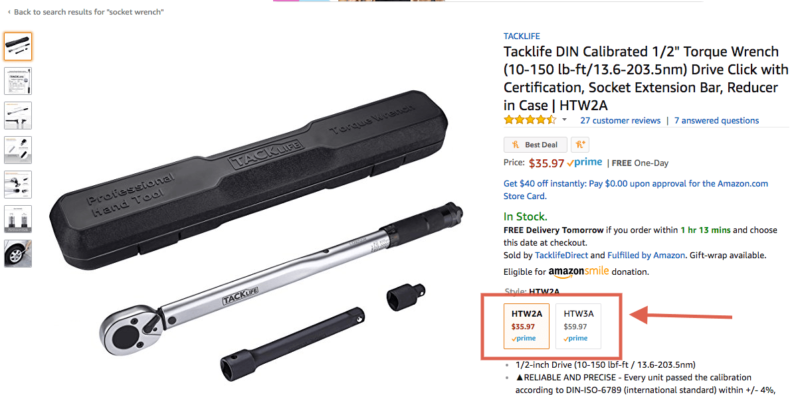
For e-commerce or service-based companies, they may find it useful to have separate pages of products based on certain attributes, such as color or size. For instance, on Amazon, you can change product color, model, and size directly from one product page:

seo optimization example

When you click on the different models, the URL of the product page doesn’t change. However, when product pages are separated based on color, size, or other metrics, it creates a more specific page for the user and as of now, isn’t currently explicitly frowned upon by Google. Separating product pages may be a good strategy for your website if the specifications are extremely important to your customers and it makes their searches easier.

Internal Linking

If you’re looking to get more visibility to your internal content pages, consider linking to related pages more regularly. As of now, internal linking three to five times with exact match anchor text isn’t a definite no-no. This type of linking can actually be useful to your users, as long as you are linking pages that make sense to one another.

For instance, if you had a horoscope website, it would make sense to link to the next horoscope at the end of each page, or to link to other informational pages on that specific horoscope.

SEO linking tactics that Google has clearly stated is against policy are massive link exchanges, buying or selling links, using automated linking programs, and other link schemes. Be sure to follow Google’s guidelines on this so your website doesn’t experience a penalty or lower visibility, once search engines catch on to what you’re doing.

Off-Site

These are SEO tactics that aren’t on your website, instead use other mediums like external websites or digital platforms like email in order to increase your search engine positioning.  While Google has talked somewhat about all three of these, they haven’t specifically stated that it’s wrong to use these strategies. You must use caution and ensure that what you are doing is useful to searchers and your target audience.

Guest Blogging

Guest blogging has been a hot topic, with some experts proclaiming it has been overused and spoiled, and others showcasing their results. However, guest blogging in 2018 should be something completely different than what it was in 2014. When it was on the rise five years ago, it was easy to put links into your guest blog posts and have them published on other websites.

Now, both publishers and search engines are cracking down on creating this type of content solely for links, which means it’s time to change your tactics. Guest blogging can still be a viable source of website traffic and leads, but all created content must be done with the goal to provide useful information that is of value.

Creating content simply because you get a bio link usually means the quality isn’t there, which won’t lead to much traffic anyway. So focus on writing high quality content for any external publishers that you have a guest blogging relationship with. Use this chance to prove your thought leadership and to get more brand awareness for your company.

Online PR

Just like guest blogging, online public relations for your website shouldn’t be done for SEO or links, but rather to increase brand awareness and to get the word out about your company. Of course, public relations is its own sector entirely, with strategies about cross-promotion, press releases, journalist outreach, and more. But as long as your company is actually doing something newsworthy (don’t create press releases just because you can), getting links from your PR efforts can be a great benefit.

Online PR isn’t regarded as a “no-no” from Google, but stick to the safe side and make sure you are generating buzz around products or news that actually can capture audience interest, instead of attempting to invent innovation where there hasn’t been anything.

Influencer Outreach

While the FTC does have guidelines in place for proper disclosure for bloggers and online influencers when they work with brands (which everyone should absolutely follow), Google hasn’t currently placed many guidelines or restrictions on working with influencers.

These types of campaigns run the gamut, from a long-term partnership that includes several blog posts and social media posts, to a single review post and giveaway. How you work with influencers usually depends on company goals and budget, but they can be a great gateway to a larger portion of your target audience that you are trying to reach. Because influencers usually have a higher trust value than ads or other types of push marketing, you may end up getting more qualified leads, often in less time.

In order to run a “clean” influencer outreach campaign, make sure everything is transparent with your relationship in any published content and make sure all content follows Google’s published guidelines. This includes no hidden links or text, low quality pages that don’t have unique content, or automatically generated content that wasn’t written manually.


SEO and digital marketing is an ever-evolving field, and in order to be successful, consider trying new things to reach your target audience. Stay vigilant of any new guidelines by Google and other search engines and strive to not rely on any one tactic for your SEO results. Just because something works now, doesn’t mean it will forever, so stick to the basics that work and spend a little time trying out new things.

The post What is Off-White SEO? appeared first on Search Engine Land.

Tell Google which report you are really missing in new Google Search Console

If you log into the new Google Search console and click on any of your verified profiles at the top right, you may see a new button in the interface named “coming soon.” That button takes you to this help document that first describes why some of the reports in the old Search Console are not yet available in the new Search Console, which rolled out to users last week. It then asks you to vote on which reports you are missing that you really want Google to migrate over to the new version.

Here is a screen shot of the “coming soon” option in the new beta Search Console menu:

Google writes on this page:

If you don’t see your favorite old Search Console report in the new Search Console, it’s probably because one of two reasons:

  • We haven’t migrated it yet. (Most likely reason) We’re in the process of building the new Search Console, and it will take some time. Most likely your favorite report (or some version of it) will be in the new Search Console in the coming quarters.
  • We’ve found a better way to present that data. We won’t migrate every report in exactly the same way if we’ve found a better way to present the same data. In some cases, we might combine a few different types of data together, or we might include the report as part of a flow, rather than a top-level report by itself. Whatever the case, we won’t stop showing data that is important to our users; we just might show it in a new, more useful way.

It then asks you which “report do you most need from old Search Console?”

Google gives you these options: Structured Data, Rich Cards, Data Highlighter, HTML Improvements, Accelerated Mobile Pages report, Links to Your Site, Internal Links, Manual Actions, International Targeting, Mobile Usability, Blocked Resources, Remove URLs, Crawl Stats report, Fetch as Google, Robots.txt Tester, URL Parameters and Security Issues.

The post Tell Google which report you are really missing in new Google Search Console appeared first on Search Engine Land.

Are you getting credit for all of your organic visits from GMB?


As search engine optimization specialists (SEOs), we all have one goal: to increase organic traffic for our clients. We optimize signals to increase the relevancy of our clients’ (or our own) sites so more people find them and check them out.

But what if some of the traffic (or even a lot of it) isn’t attributed correctly, and you aren’t getting credit for it?

It’s a mystery, Watson!

Unfortunately, Google My Business (GMB) clicks have an attribution problem. We’ve seen cases where hundreds or even thousands of monthly GMB clicks are incorrectly attributed as “direct” in Google Analytics.

Whenever someone clicks on your Google My Business link from a mobile device, it is likely the click will show as direct instead of organic. With mobile search continuing to grow, this is a problem that will not go away.

You don’t have to put on your detective hat and try to dig up proof you are getting more organic traffic than Google Analytics is showing; you just need to tweak your website link.

Adding an Urchin Tracking Module (UTM)  to force the source to show as “organic” lets you take the credit for all the hard work you’re doing. You can attach a UTM code to a custom URL and track promoted content; the results will show in Google Analytics and report where searchers came from.

Simply add:

?utm_source=GMBlisting&utm_medium=organic

to the end of your website link in your Google My Business dashboard, and you’re good to go! Now, every click on your GMB link will show as an organic click in Google Analytics.

The mystery does not stop there

Google recently rolled out Google Posts, and the click attribution problem has spread there as well. If you are using or testing Google Posts, keep an eye on the click data since, from my experience, it doesn’t seem to match up.

Again, the suspicion is that organic clicks are being attributed as direct traffic. It works exactly the same way as the website link in Google My Business: You have to add UTM tracking if you want to be sure the traffic is correctly attributed as organic.

The best practice here would be to use the “utm_campaign” variable to give each Google Post a unique link, with the source set to “GooglePost” and the medium still set to “organic.”

The new Google Search Console provides more insight

Everyone has access to the new version of Google Search Console. It allows you to filter clicks and show only clicks to pages using UTM variables.  Click to Search Traffic > Search Analytics, then click the radio button next to “Pages” and enter “UTM” into the field. Your click graph will recalibrate and show all the clicks for anything including UTM links.

UTM click tracking in Search Console

Now you know you’re getting the credit for all of your organic visits, and both Google Analytics and Search Console share that data. You’ll look great to your clients (or your boss), and it’s much easier to prove the value of your efforts.

The post Are you getting credit for all of your organic visits from GMB? appeared first on Search Engine Land.