Wednesday, April 4, 2018

Google local knowledge panel profile images are not loading in search

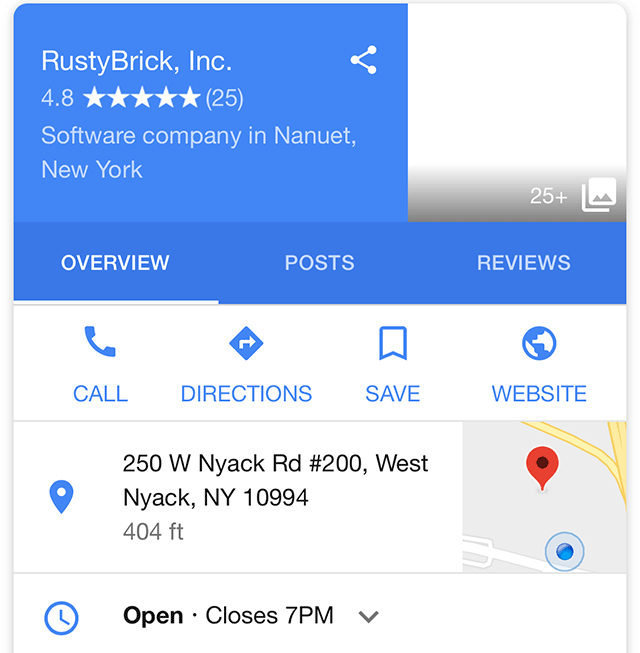
There is an active bug with Google search. It’s not loading the profile images in the local knowledge panel section. If you search for your favorite business and the local knowledge panel shows up in the search results, both desktop or mobile results, the profile images will not load. Instead, you will either see a blank white space or a broken graphic image.

This is a global and widespread issue that has been reported to Google. We assume it will be resolved shortly, but until then, you do not need to panic. Google should fix the issue on its end.

Here are some screen shots I took from both desktop and mobile of some local knowledge panels:

Mike Blumenthal, who is a top contributor volunteer at Google confirmed the company has been notified of the issue:

The post Google local knowledge panel profile images are not loading in search appeared first on Search Engine Land.

Bing Ads launches mobile price extensions

Bing Ads announced the rollout of price extensions on Wednesday.

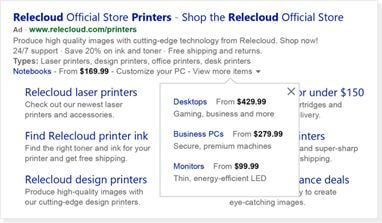
Price extensions appear in text ads that appear in the top spot in mobile search results. Advertisers can use them to show prices for products or services and include up to a 25-character description with each extension. One price extension is visible from the ad, and a “view more items” drop-down displays three additional listings.

Bing Ads price extensions are now available in the US and rolling out to international markets.

The prices used in price extensions must be visible on the landing page, and that landing page can be on a third-party retailer site like Amazon or Walmart, as opposed to the advertiser’s e-commerce site. Advertisers are charged for clicks on price extensions, just like sitelinks.

Price extensions can be set up in the Bing Ads UI, via the Bing Ads API or imported from AdWords campaigns.

Just as when Google introduced price extensions in AdWords on mobile first, Bing Ads price extensions are only available on mobile at this time.

They’re live in the US now and will start rolling out internationally this month, except in China, Hong Kong and Taiwan.

The post Bing Ads launches mobile price extensions appeared first on Search Engine Land.

Tuesday, April 3, 2018

SearchCap: Google’s AMP Project, John Harrison Google doodle & more

Below is what happened in search today, as reported on Search Engine Land and from other places across the web.

From Search Engine Land:

Recent Headlines From Marketing Land, Our Sister Site Dedicated To Internet Marketing:

Search News From Around The Web:

The post SearchCap: Google’s AMP Project, John Harrison Google doodle & more appeared first on Search Engine Land.

Learn the benefits of pay-per-call for affiliate marketing

Affiliate marketing campaigns — where businesses pay affiliates (or an affiliate network) a commission for sending them website visitors, leads or customers — continue to grow in popularity. It is projected that affiliate marketing spending in the US alone will exceed $5.3 billion this year, up from $4.7 billion last year.

To help optimize ROI and generate more customers from affiliates, many businesses now have dedicated Affiliate Managers. They are responsible for onboarding and managing affiliates and tracking and optimizing return from affiliate campaigns. For businesses in industries that value phone calls — such as financial services, insurance, home services, travel and hospitality, education, legal services, health care and more — those campaigns include pay-per-call.

This guide from DialogTech is for affiliate managers who are interested in pay-per-call. It explains what pay-per-call is and its benefits to businesses. It covers best practices affiliate managers can follow to optimize pay-per-call ROI. For affiliate managers looking for help to track and manage campaigns, the handbook also provides an introduction to pay-per-call management platforms.

Visit Digital Marketing Depot to download “The Pay-Per-Call Handbook for Affiliate Managers.”

The post Learn the benefits of pay-per-call for affiliate marketing appeared first on Search Engine Land.

Google’s AMP Project announces new consent component ahead of GDPR compliance deadline

With the deadline for the General Data Protection Regulation (GDPR) fast approaching, Google’s AMP team has announced a component to enable publishers to surface a user consent notification for sites using the mobile-friendly framework.

From the announcement:

The features to be launched include the ability to show choices in user interface notices via “accept” and “reject” semantics, and configuration of AMP element behaviors in response to users’ choices.

The GitHub issue page details the component’s format and configuration options, along with future feature suggestions. As the issues surrounding GDPR consent and compliance are complicated — including acquiring per-usage consent (e.g., publishers need to acquire separate consent for users being tracked for both first-party and third-party purposes) — the project team is encouraging publishers and vendors to participate in the component’s development so that support will be available for as many integrations as possible. They particularly note existing support within AMP for these types of features and state that user consent may need to be obtained before loading them:

AMP supports over 100 vendor-provided capabilities ranging from analytics to ad tech to video players and other kinds of content embeds. As a publisher, if you want to ensure your vendors integrate with AMP’s user control features, please encourage the vendor to engage with the AMP Project.

The proposed format is relatively straightforward, as shown in the sample code image below, but it may become a bit messy for publishers needing to acquire many different types of consent for analytics, tracking and ad tech that may be present on their sites:

Proposed AMP consent component

It’s important to note that for now, GDPR compliance applies only to EU citizens visiting a publisher’s site. You’ll want to dig into understanding how that goes beyond mere country detection, however, as EU citizens not physically within the EU are protected by GDPR wherever they are.

In speaking with the IAB Senior Manager, Privacy and Public Policy Matthias Matthiesen at IAB’s annual leadership conference earlier this year, he noted that because of the intricacies of compliance, many publishers and organizations coming into compliance are taking a “GDPR everywhere” approach because parsing out consent for users “of unknown citizenship” is actually the more complicated path.

The post Google’s AMP Project announces new consent component ahead of GDPR compliance deadline appeared first on Search Engine Land.

How to use the Knowledge Graph for higher rankings

Google has been on a mission to transform search from “strings to things.” This mission was one of the many reasons for the Hummingbird update and the rise of RankBrain.

To pull off this extraordinary feat, Google and its team of engineers needed to create connections between their data using “real world context.” This resulted in what we now know as “The Knowledge Graph.”

Google’s goal is to create a “massive graph of real-world things and their connections, to bring more meaningful results.” When searching for information, users are no longer constrained by 10 blue links; instead, Google now displays relevant content that adds to the content of the user’s search.

For example, let’s say you want to learn more about Abraham Lincoln. After typing in the query, “Abraham Lincoln,” Google will show a “card” on the right side of your search with interesting information about Honest Abe.

Here is what the Knowledge Graph gives us inside Abe’s card:

  • Name.
  • Multiple head shots.
  • Title.
  • Short bio.
  • Height.
  • Death.
  • Spouse.
  • Kids.
  • Quotes.
  • “People also searched for.”

That’s a lot of information for typing in two words. Cleary, a result like this will benefit the searcher much more than a link. But this result can also help search engine optimization specialists (SEOs) and digital marketers.

If we look more deeply into the cards, we will uncover what type of information Google has determined is most helpful to a user. We can use this knowledge to help us deliver better results and earn more visibility.

Relational history

Let’s take another look at the information Google gave us on Abe Lincoln. The name, head shot and bio stuff is pretty self-explanatory, but height? Why that information? Well, as you may remember from school, Abe Lincoln was known as a tall man. Because Google knows this piece of relational history, they thought it might be good to add to his card.

How about quotes? Why add that section? Again, Abraham Lincoln is famous for some of the most powerful speeches in American history, so Google adds some of his most popular quotes to his card.

Can you see how they are taking one phase and attaching much deeper meaning to the information? Google is giving more than quick answers, and with the creation of the knowledge graph, it can share related and contextual knowledge that adds value to the search.

Types of cards

There are many types of cards, all containing specific and unique information related to the searcher’s intent. While there aren’t cards for everything, here are a few of the most popular types of content shown in a knowledge graph card.

  • People.
  • Music.
  • Weather.
  • Sports scores.
  • Tweets.
  • Movies.
  • Recipes.
  • Images.
  • Businesses.
  • Map locations.

This list is pretty extensive and doesn’t even cover all of the opportunities available. What makes these cards so compelling is that they stand out against the “regular” listings. If your brand can get listed in any of these cards, you’ll drive very targeted traffic back to your site.

This leads us to a very big question: “How can I show up in a knowledge card?” Below are two ways to leverage knowledge graph cards.

Now, it’s important to note that you should not view the recommendations below as a “step-by-step” or “foolproof” guide. As we talked about above, Google is making relational connections, and each query will be looked at contextually. My goal is to share best practices on where to start.

Schema markup

If we step back for a moment and see Google for what it is, a database, we quickly understand why it likes structured data better than unstructured data.

If you have ever dealt with a spreadsheet or database, you know what I mean. When you have poor data, you have to fix it before you can make a decision. But if your data is pretty clean and accurate, you can work with it easily.

Schema markup is a common markup language that Google and other search engines use to understand the content of a webpage better. Using schema requires some technical knowledge to pull off, but it’s not as scary as it sounds.

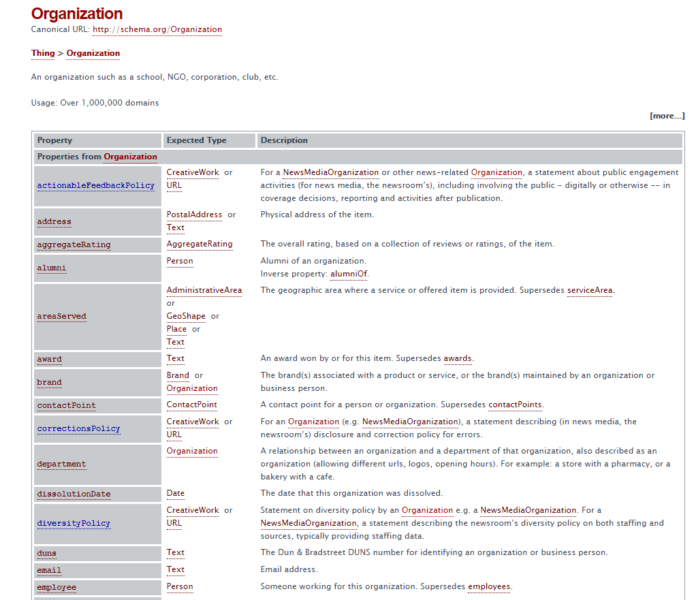
To get started, become familiar with the different types of common schemas.

You can become overwhelmed on this site, so to start, just focus on high-level areas like creative works, organization, person, product or review.
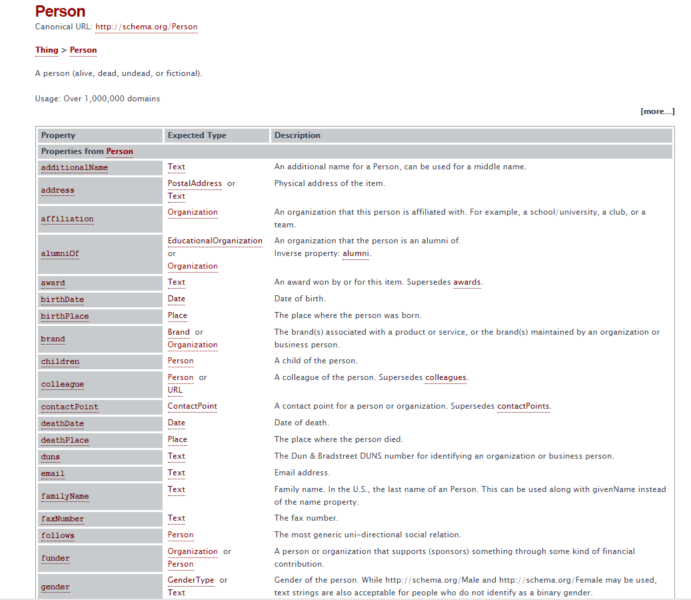
Once you know the type of content you want to mark up, you can begin creating your schema.

Again, there are a lot of ways to do this. My favorite is JavaScript Object Notation for Linked Data (JSON-LD). Don’t let the acronym scare you away. You don’t need to be a programmer to create this. Use this tool to help you create your JSON-LD Schema:

Source: TechnicalSEO.com

Simply fill out the information and copy the code it generates.

The reason I like JSON-LD is that you can add it anywhere on your page, and it doesn’t affect the cascading style sheets (CSS) or HyperText Markup Language (HTML) like some other forms of adding markup. While you can add it directly into a page, I still recommend creating a tag in tag manager and adding the code there.

Once it’s added, make sure you check that everything is firing correctly using Google’s Structured Data Testing Tool:

When you add schema to your site, you help Google better understand your content and add valuable metadata to its database.

Since you have given Google more information about your company, person or topic, you are positioning yourself as a valuable advisor. This won’t guarantee placement, but it will increase your chances of being included.

Contextualized content

Many people out there have stressed the importance of creating good content, and I agree with most of them. The question is, what is good content? That question was nearly impossible to answer — until now.

One thing knowledge cards can tell us is what Google considers “good content.”

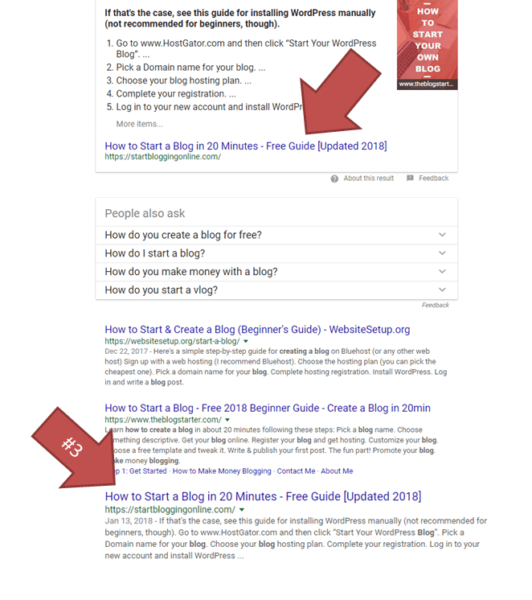
For instance, if you want to help your readers start their own blog but aren’t sure what type of content to write, a simple query, “how to create a blog,” can tell you a lot.

The first thing we see is a “how to” article with very specific steps.

This is an updated guide for this year (another clue: keep your content fresh!) and has a keyword-focused title. I would read over this article and see where I can improve the content. Then I’d create a new piece from my perspective and promote it like crazy.

If that route seems too hard, the “people also ask” card gives you other options to review. Each of these boxes contains links to other articles about similar topics.

Now, here is the cool part about these knowledge cards. See the article, “How to Start a Blog in 20 Minutes,” and the website it sits on?

Because that content was considered best, it was featured on the card, even though the actual site ranks three positions below the knowledge card!
The knowledge graph levels the playing field. If you take the time to investigate what is working and answer people’s questions, you can drastically improve your search presence.

The move from “strings to things” is quite the endeavor for Google to tackle. Making sense of all this data and delivering helpful results is no simple task.

The knowledge graph and its associated cards have greatly improved the search experience for users. While these cards have some shakeup in how sites are listed by optimizing for them, you can raise the visibility of your brand online in a new and powerful way.

The post How to use the Knowledge Graph for higher rankings appeared first on Search Engine Land.

John Harrison Google doodle honors man who invented marine chronometer 283 years ago

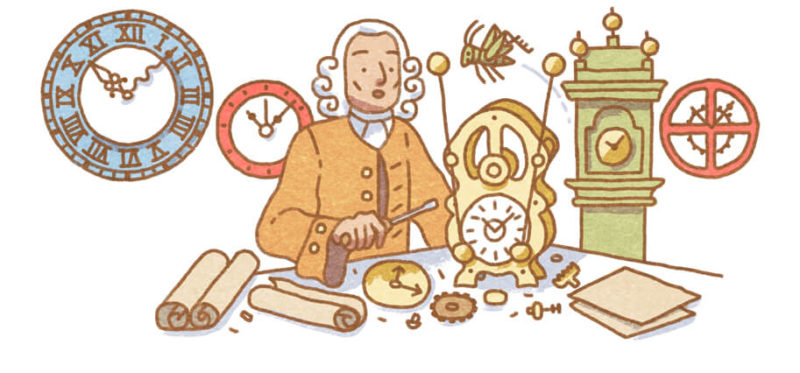
Today’s Google doodle marks the 325th birthday of British horologist, John Harrison. In 1735, the self-taught clockmaker completed his design of the first marine chronometer.

According to Google, the British government had offered a reward of £20,000 to anyone who could create a navigational instrument that determined a ship’s longitude within 30 miles. Harrison spent seven years working on the ground-breaking invention that would aid British naval forces.

“Harrison’s extraordinary invention brought him much acclaim. Thanks to him, seamen could not only gauge latitude but longitude, making their excursions far safer,” says Google on its Google Doodle blog.

The doodle leads to a search for ‘John Harrison’ and is being displayed on Google’s US and UK homepages along with a small collection of other international pages, including Ireland, Germany, Spain, Ukraine, Peru and Chile.

Harrison would go on to create more watches that were smaller, and more accurate, than his original designs: “Our colorful Doodle shows the inventor hard at work, surrounded by the tools of his trade. Today, time is on his side.”

The post John Harrison Google doodle honors man who invented marine chronometer 283 years ago appeared first on Search Engine Land.