Friday, March 2, 2018

Community Corner: Spotlight on Search Engine Land Award Winners Brainlabs & Trimark Digital

During the last five weeks, Search Engine Land has conducted a number of interviews with last year’s Search Engine Land Award Winners. In this week’s series, we are featuring Brainlabs and Trimark Digital.

Brainlabs was awarded two trophies at last year’s event: Best Retail Search Marketing Initiative for SEM and the Best B2C SEM Initiative for Enterprise award. Trimark Digital’s SEO campaign for the Fairview Garden Center helped it win Best Overall SEO Initiative for Small Business award.

“We’ve long been known as a lead generation agency from a paid search perspective,” says Trimark Digital lead digital strategist, Dani Roberts. In today’s spotlight interview, Roberts shares how the team focused on a client’s organic digital performance to take home the award — proving her agency’s ability in SEO as well as paid search.

If you’re considering whether or not to submit an entry for this year’s Search Engine Land Awards, be sure to check out interviews with last year’s winners: iCrossing, Precis Digital and SapientRazorfish.

This year’s Search Engine Land Awards will be hosted on June 12 in Seattle, Washington as part of the SMX Advanced Conference after hours events. There’s still time to submit your entries, but the deadline is looming with early entry deadline on March 31, and a final deadline on April 13.

Best Retail Search Marketing Initiative for SEM & Best B2C SEM Initiative for Enterprise: Brainlabs

Brainlabs’ Sophie Newton representing her agency at the 2017 Search Engine Land Awards.

With offices in London and New York, Brainlabs took home two trophies from last year’s Search Engine Land Awards event — Best Retail Search Marketing Initiative and Best B2C SEM Initiative for Enterprise.

“Finding recognition for our work at a huge awards ceremony in the US, for US clients, was crucial for us,” says Brainlabs’ Rory Jones, “We wanted to show how proud we are to work with these businesses, and the Search Engine Land Awards was a great opportunity.”

Brainlabs winning entries went through a rigorous process, starting with the agency’s client account teams doing the ground work and getting client sign-offs, before moving on to marketing.

“The marketing department took over, making it interesting to read, improving the flow, and adding any creative aspects from there.”

Jones said, overall, each submission took a good few hours to complete. The agency focused on campaigns that showcased its innovation in connection to great results.

“At Brainlabs, we have a serious emphasis on innovation and creating innovative solutions to clients’ projects — often with a bespoke piece of tech made just for them,” says Jones. He believes it was this combination of innovation and remarkable client results that helped Brainlabs submission capture the attention of awards committee.

“As you’re told at school before exams: the examiners (or judges) have to go through a lot of these, so if we can make their job easier — and stand out at the same time — then all the better for us.”

While they haven’t been able to measure exactly how winning the award has impacted their business, Jones says it let his team know they’re doing the right things.

“It spurs us on to improve and do better next time. We’re constantly growing and innovating, making more awards possible in the future,” says Jones.

Best Overall SEO Initiative for Small Business: Trimark Digital
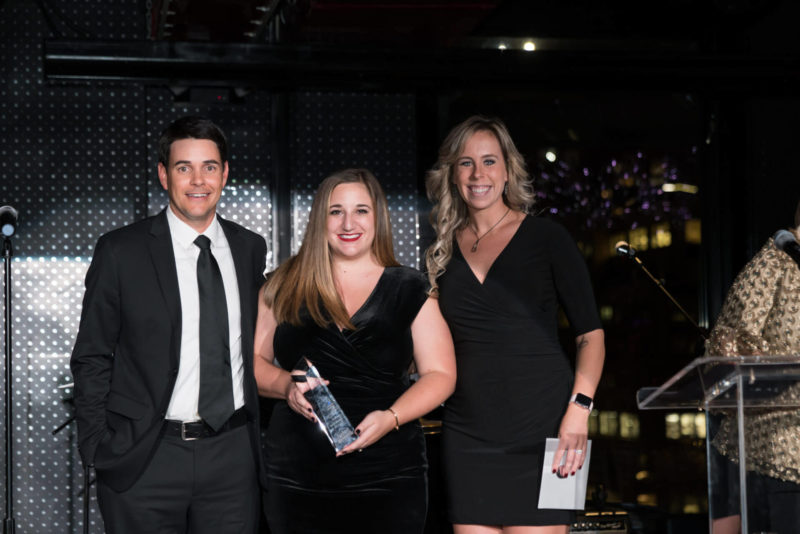
Trimark Digital’s team accepts the award for Best Overall SEO Initiative for Small Business.

Trimark Digital’s lead digital strategist, Dani Roberts, says her team realized just how strong their SEO strategy for Fairview Garden Center was when they began writing up the submission.

“It’s different than anything we’ve ever done before and we’ve taken a lot of risks with this client,” says Roberts, “But, we’ve also seen huge rewards.”

Built around a mix of technical SEO elements and outside-of-the-box creative SEO thinking, Brainlabs campaign landed the agency a Search Engine Land Award for Best Overall SEO Initiative for Small Business at last year’s event.

“Aside from our outstanding SEO department finally getting some of the public praise and recognition that they so rightfully deserve, this win has really helped us focus in more of our small business division and be more confident in talking with our small business clients about more outside-of-the-box strategies.”

Roberts says SEO can be a difficult strategy to communicate to clients, but being named a Search Engine Land Award winner helps the agency prove its has the knowledge and tools to succeed in this arena.

For the Fairview Garden Center SEO campaign, Roberts says the agency worked hard to stay on top of SEO trends and updates.

“We jumped on new features offered by search engines, like Google Posts, and we heavily utilized schema markup throughout the site and worked to keep it as updated and robust as possible. We prepped for major algorithm updates like mobile-first indexing and site speed as soon soon as we caught wind that these updates might be a possibility.”

Roberts believes her agency’s cutting-edge strategy helped land the team its award.

“I think it has added to the level of trust that our clients place in us with their organic strategies,” says Roberts, “We’ve truly been able to take some of our small business clients to the next level with their added trust in us as a result of this win.”

According to Roberts, the team’s winning entry practically wrote itself.

“We’ve had such a great relationship with Fairview Garden Center over the past couple of years and they’ve always treated us as a true partner in their business, so it was easy to summarize all the work we’ve put in for them and the results we’ve seen from it.”

Roberts says the team had been tracking the campaign’s digital performance and overall business growth as a single effort from the beginning — aiming to see things from a big picture perspective, and finding areas where they could help the business grow.

“The submission process was easy,” says Roberts since the agency had already done so much leg work, “It was just a matter of compiling data.”

Roberts says the award has been a tremendous honor for Trimark Digital’s small SEO department — and a huge recognition for the organic team that is often overshadowed by the paid campaign strategies the agency is known for.

“It’s a true testament to a creative and ongoing, cutting-edge approach to organic search that really works,” says Roberts, “To be honored in this way — amongst some of the best in the business — really proves to us and our clients that we are doing something right, and that there’s a very bright future ahead for all involved.”

If you want to join the esteemed list of Search Engine Land Award winners, please submit your entry before the early entry deadline of March 31, 2018. Submissions will be accepted through the final deadline of April 13. The Search Engine Land Awards team has added several new categories this year, including Best Search & Social Media Marketing Initiative, Best Research Initiative by an Agency or Individual and Best Boutique Agency for SEO and SEM.

You can learn more about the upcoming awards event and how to submit your entry at 2018 Search Engine Land Awards.

The post Community Corner: Spotlight on Search Engine Land Award Winners Brainlabs & Trimark Digital appeared first on Search Engine Land.


Bing Entity Search API is now available

Bing announced that their Bing Entity Search API is now available to US based users and also in Australia, Brazil, Canada, France, Germany, India, Italy, Mexico, Spain and the United Kingdom regions.

The Bing Entity Search API lets developers and creators programmatically pull in Bing Knowledge Graph structured data on topics such as people, places, things, and local businesses into their platforms and tools – similar to what you can do with Google’s Knowledge Graph Search API. It can be used on programs such as mobile or web applications, blogs, or web sites. You can preview the output from the API right over here by typing in a query into the search box and hitting enter.

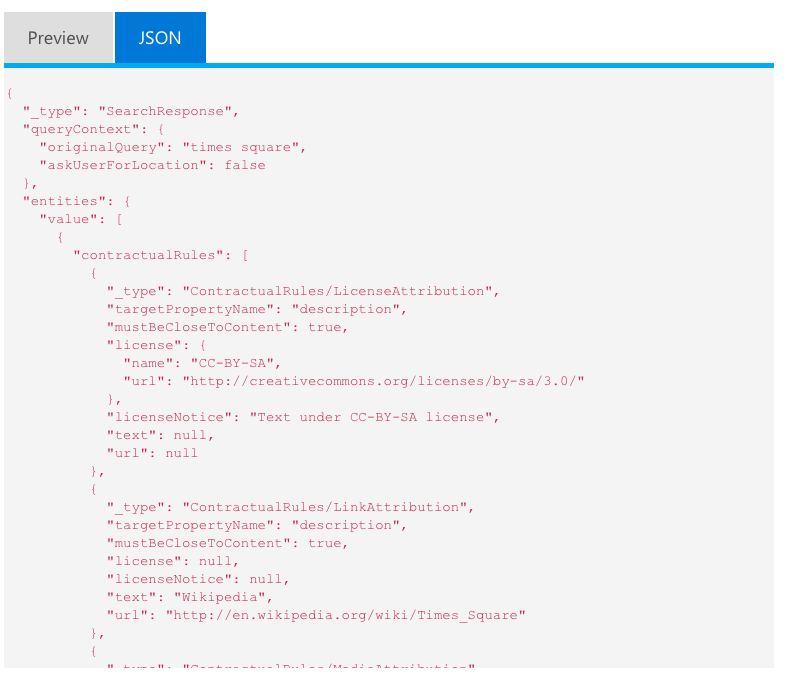
For example, I searched for [times square] and the API returned this data and preview:

The JSON output is exposed by clicking on that tab (shown below):

This information comes from the Bing Knowledge Graph and is currently used in Microsoft products such as Bing.com, Cortana, Xbox, Office, Skype and more.

The standard pricing is $3 per 1,000 transactions and you can get 100 transactions per second through the API.

You can start experimenting with this API here.

The post Bing Entity Search API is now available appeared first on Search Engine Land.

10 ways to increase calls from paid search

The massive increase in phone calls is one of the most notable side effects of the emergence of the mobile consumer.

By 2019, BIA/Kelsey predicts 162 billion calls to businesses from mobile devices alone. With 70% of consumers using click to call from mobile search, it’s time to reimagine stale best practices, add new layers to your analytics, and breathe new life into your mobile search campaigns.

Download this step-by-step guide from Invoca to learn how to:

  • Capture key caller data.
  • Use this data to optimize your campaigns, bidding, and targeting strategy.
  • Find new areas of opportunity.

Visit Digital Marketing Depot to download “How to Increase Calls from Paid Search: 10 Guaranteed Tactics.”

The post 10 ways to increase calls from paid search appeared first on Search Engine Land.
What is GS1 SmartSearch Schema markup and why should e-commerce sites use it?

By now most of us should be familiar with Schema Product markup which can be leveraged for listings on e-commerce sites.

The benefits of implementing this are serving up your product data in a structured format that is search engine friendly and has the potential to gain rich results such as product rich snippets and rich cards for your product pages.

Now there is a more advanced way to implement Schema Product markup which provides the benefits mentioned above and can also help your products gain additional visibility. Called GS1 SmartSearch, this advanced structured data type includes customer-facing attributes related to food, beverage, tobacco and healthcare, as well as to clothing and footwear.

GS1 SmartSearch

GS1 SmartSearch also allows you to highlight more elements than a normal Schema Product markup such as Global Trade Item Number (GTIN) details which can help improve the discovery of your products.

Here is a short video explaining GS1 SmartSearch.

Back in 2016, Schema.org announced GS1 Web vocabulary is now an external extension of their format.

“GS1’s SmartSearch initiative has been working with the schema.org community (at W3C and Github), creating a Web-based structured data vocabulary that extends schema.org to support richer product data description. Unlike our hosted extensions (e.g. bib.schema.org, auto.schema.org) that are reviewed, versioned and published as part of schema.org itself, external extensions to schema.org such as GS1’s are fully independent and have their own workflows, review processes and infrastructure.”

So GS1’s format works with Schema and is recognized by the search engines. GS1 stated the following benefits of using their format:

  • Better search results for consumers to find the products and information they need.
  • Greater visibility of their products in online searches
  • Improved, accurate online product information.
  • Shared product information via consumer-facing mobile devices and websites, which ultimately drive sales.

Example of GS1 SmartSearch Schema product markup

Tesco is an online grocery site based in the United Kingdom (UK)  and currently leverages the GS1 SmartSearch format for their products.

Here is what the JSON-LD code looks like on the page.

I ran a test of the page in the Google Structured Data Tool and it had no problem parsing the JSON-LD provided GS1 SmartSearch annotations.

How to implement

The GSI SmartSearch format includes many of the common Schema elements plus more advanced elements. GS1 has a full guide which outlines detailed information on Product and other Schema markup types.

The recommended code format is JSON-LD and similar to the regular Schema Product markup it has to live within the body section of the page and the content must appear on the page where users can see it.

Here is a partial snapshot of the GS1 SmartSearch Product guidelines.

I would recommend testing this on your product pages first before implementation. This could help get your products discovered and seen by more people in the search process!

The post What is GS1 SmartSearch Schema markup and why should e-commerce sites use it? appeared first on Search Engine Land.

Yelp offers new ad customization to advertisers

Yesterday Yelp announced “custom ads” for small businesses. They offer advertisers on the platform the ability to select a desired review and image to appear in their ads. This is similar to TripAdvisor’s ad program allowing advertisers to feature a favorite review.

Yelp says these ad units are being quickly adopted:

By giving advertisers the ability to select which photos and reviews they would like to feature in their ad, we’re providing a unique tool that leverages the voice of a customer to promote their business. Based on our initial tests, businesses owners and marketers are loving the increased controls of Custom Ads. We’ve already seen 30% of new advertisers using this feature.

If advertisers are uncertain about which photos or reviews to use, Yelp explains that a machine learning algorithm can do it for them, increasing the likelihood of user response and clicks. The company also says that it will deploy “up to thirty sample ads with varying combinations of photos and reviews” to determine which ones perform best on behalf of the advertiser.

In order to utilize the new ad unit, marketers must claim their Yelp profile, select “customize ad” in the business dashboard and then either manually select an image and review or let the system make those choices, as indicated above.

Last month Yelp completed what the company said was a very successful test in Canada using email address matching and guest WiFi to measure foot traffic and offline conversions driven by its online ads.

The post Yelp offers new ad customization to advertisers appeared first on Search Engine Land.

Search in Pics: Google Dublin snow, dog racing & Noogler handbook

In this week’s Search In Pictures, here are the latest images culled from the web, showing what people eat at the search engine companies, how they play, who they meet, where they speak, what toys they have and more.

Google Dublin got some snowy weather:


Source: Instagram


Source: Instagram


Source: Instagram


Source: Instagram

Dog racing inside the Google office:


Source: Instagram

The Noogler handbook:


Source: Instagram

Google Dublin’s skybridge:


Source: Instagram

The post Search in Pics: Google Dublin snow, dog racing & Noogler handbook appeared first on Search Engine Land.

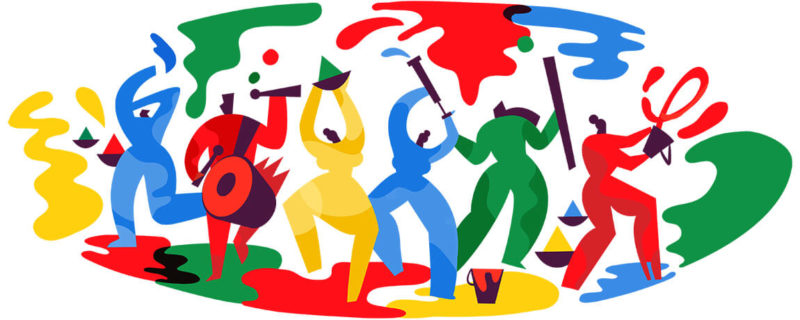
Holi Google doodle celebrates the Hindu holiday with a colorful image of dhol players


Today’s Google doodle marks the start of Holi, the Hindu holiday signaling the end of winter and [insert great sigh of relief] beginning of Spring.

Traditional Indian Holi festivals are centered around communities coming together to play music and dance while covering their landscape with vivid colored powder and water. Google’s Holi doodle borrows from the company’s own brand colors to depict these celebrations and highlights the dhol players often connected to the holiday. (Dhols are the traditional wooden barrel drums from South Asia.)

From the Google Doodle Blog:

These traditional drummers move from house to house, adding a peppy, musical touch to the day’s festivities. The four main powder colors carry with them a piece of symbolism. Red signifies love and fertility; yellow is the color of turmeric, a natural remedy; blue represents the beloved Krishna; green symbolizes spring and new beginnings.

The image was created by guest doodler Amrita Marino and leads to a search for “Holi.” Here’s the full image of today’s Holi doodle, along with early drafts of the illustration shared by Google:

Holi 2018 Google Doodle

Early Drafts of the Holi Doodle

Born in Calcutta, India, Marino is a Brookly-based graphic designer and illustrator whose artwork has appeared in a number of publications, including The New York Times, Lenny Letter, Martha Stewart Magazine and Dwell.

The post Holi Google doodle celebrates the Hindu holiday with a colorful image of dhol players appeared first on Search Engine Land.